

A Decade After Italy’s Deadly Earthquake, Amatrice Still Struggles to Rebuild
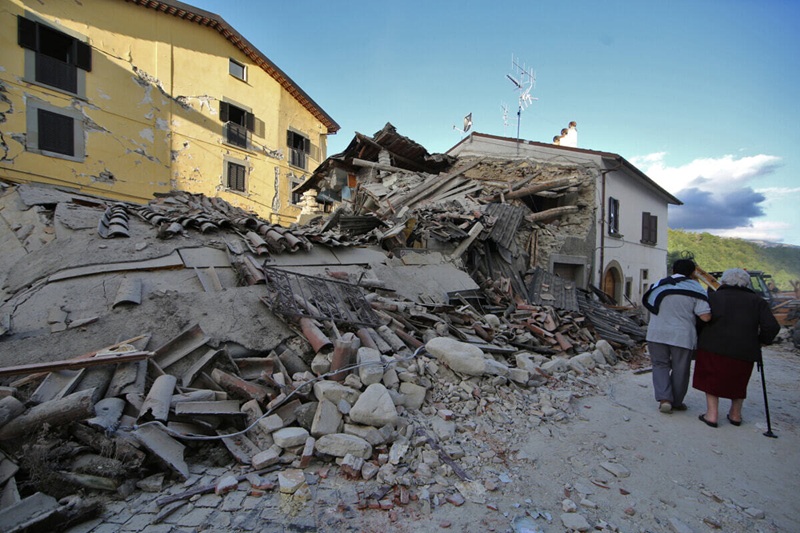
A Decade After Italy’s Deadly Earthquake, Amatrice Still Struggles to Rebuild Walk through Amatrice today and you’ll find a town caught in-between half-finished buildings, construction cranes, and stretches of empty ground where houses used to stand. It’s been ten years since the earthquake, and the wounds are still visible. The magnitude-6.2 quake hit central Italy on August 24, 2016, and it hit Amatrice hardest of all. Of the 303 people killed across the region, 237 were from this one town. Thousands more lost their homes overnight. A decade later, there’s been real progress but “rebuilt” still isn’t the right word for what’s happened here.
Why It’s Taken So Long
Rebuilding a town that was almost entirely flattened in a matter of minutes was never going to be simple. Between tangled bureaucracy, disputes over who owns what, a pandemic that brought everything to a halt, and the usual headaches of Italy’s construction incentive system, progress has crawled. There have even been worries about organized crime trying to muscle in on reconstruction contracts, one more complication in an already difficult process.
The numbers tell the story bluntly: as of late August, roughly 38% of properties had actually been restored, and about 60% of residents were still living in temporary housing. Ten years is a long time to wait for something as basic as a permanent home, and that frustration hasn’t gone away for a lot of families. That said, the work hasn’t stalled completely. By May 2026, 1,501 private reconstruction applications had gone in, with 828 projects underway and 348 construction sites finished. More than 1,600 buildings and 2,600 housing units have already come back online, according to the official reconstruction commissioner’s office.
What’s Being Rebuilt Now
At this stage, officials aren’t just patching up damaged buildings, they’re trying to bring the town itself back to life. That means rebuilding the hospital, the town hall, the police station, and several historic churches. The hospital alone now has more than €28.9 million behind it, boosted by an extra €1.47 million approved this past May. One of the more ambitious projects is Casa Futuro, a redevelopment of the old Don Minozzi complex, with architect Stefano Boeri involved in shaping it. The idea is to create housing, social spaces, and facilities aimed at young people and the wider community. As of February, construction was moving along, with completion expected sometime in 2027.
Stay informed with these stories shaping global headlines and raising new questions.
Could Hormuz Tensions Trigger Wider Crisis?
Check out the latest developments surrounding the US naval blockade of Iran and rising Strait of Hormuz tensions.
What Happened to Italy’s Renaissance Treasures?
Uncover the shocking museum heist involving four priceless Renaissance masterpieces stolen from Italy.
Why Did Police Investigate Elderly Man?
Find the details behind the Singapore assault investigation following an elderly man’s interaction with a child.
Why Did Trump Cut Military Exercises?
Browse the latest developments after Trump ordered a substantial reduction in joint military exercises.
What Does France’s Muslim Brotherhood Report Reveal?
Explore France’s new report and the questions it raises about Islamist networks across Europe
More Than Just Buildings
The real challenge with a disaster like this isn’t just physical reconstruction, it’s whether a place can hold onto its people. Jobs disappeared, schools were disrupted, businesses shut down. You can rebuild every house in town, but if the shops never reopen and young people don’t come back, the town itself doesn’t really recover. That’s the shift in thinking you hear from local officials now less about concrete and more about stitching the community’s social and economic life back together. At a conference in Amatrice this past May, that was the message: safety and innovation matter, but so does actually giving people reasons to stay and rebuild their lives there. It says something that Italy’s government has kept the national state of emergency for the 2016 earthquakes in place through the end of 2026 a decade on, and it’s still considered an active crisis.
Still Waiting for Normal
So Amatrice’s story right now is a mix of real progress and real frustration. There are cranes on the skyline again, major projects finally moving forward, thousands of individual reconstruction cases resolved. But if you’re a family still stuck in temporary housing, those milestones can feel pretty far away. The question isn’t really “can Amatrice be rebuilt” anymore clearly, brick by brick, it can. The harder question is whether reconstruction can bring back what actually made it a town: the people, the businesses, the everyday sense of belonging. For the people who lived through it, that’s the only measure of recovery that really counts.
FAQs
1. When did the Amatrice earthquake happen?
The devastating earthquake struck central Italy on August 24, 2016, with Amatrice among the worst-hit towns.
2. How many people died in the 2016 earthquake?
The disaster killed 303 people across the affected area, including 237 people in Amatrice.
3. Is Amatrice fully rebuilt?
No. Reconstruction is still underway. While hundreds of projects have been completed, many homes and public buildings remain under reconstruction.

