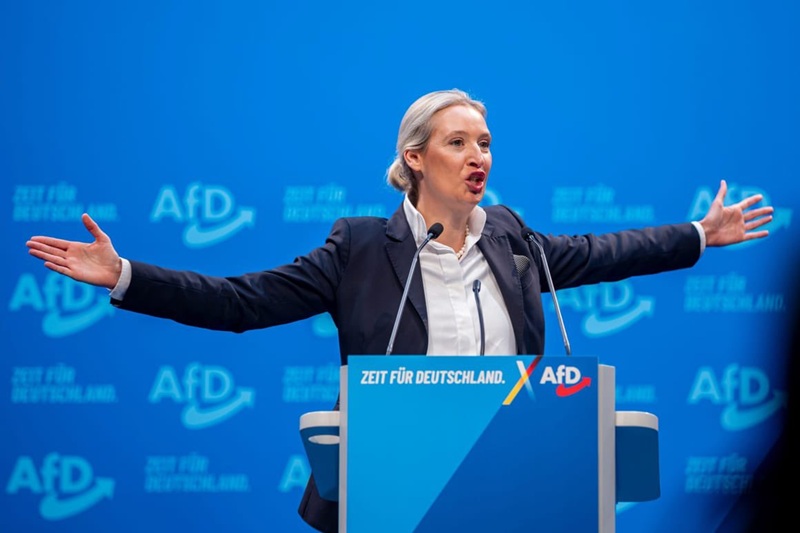
Germany’s AfD Demands Coalition Talks After Historic Saxony-Anhalt Election Win: What Happens Next?
Germany’s political map just got a lot more complicated. In state elections in Saxony-Anhalt, the far-right Alternative for Germany came out on top with nearly 44% of the vote, by far its best result in any German state election to date, and enough to make it the largest party in the regional parliament. It picked up 39 of the 83 seats, just three short of an outright majority. That’s the headline number. What comes next is messier.
A win, but not a government yet
Winning the most votes doesn’t automatically translate into power. AfD’s state leader, Ulrich Siegmund, is framing the result as a mandate to lead and says his party is open to talks with other groups. But Germany’s mainstream parties have spent years maintaining what’s often called a “firewall” , a general refusal to govern alongside the AfD. Chancellor Friedrich Merz’s CDU, which took a beating in this election (dropping to just over 17% and losing more than half its seats), has already ruled out any coalition with them. That’s not surprising given that domestic intelligence services classify the AfD’s branch in the state as a confirmed right-wing extremist group, which mainstream politicians point to whenever they explain why they won’t work with it.
The wildcard: BSW
The one party that might be willing to break ranks is Sahra Wagenknecht’s BSW, a newer left-populist outfit that barely cleared the 5% threshold needed to enter parliament, picking up five seats. Combined with AfD’s 39, that would be enough to hit the 42-seat majority mark. Nothing’s confirmed, but it’s the only realistic path being discussed and it would be a genuinely explosive move if it happened, given BSW and AfD sit at opposite ends of the political spectrum on plenty of issues even as they overlap on some (like skepticism toward continued support for Ukraine).
What’s Making Headlines You Can’t Miss?
Could Hoekstra Face Expulsion From Canada?
Check out why thousands of Canadians are demanding action against the US ambassador.
Who Is Martina Strong, Really?
Uncover the diplomat’s UAE appointment and the political delays surrounding her confirmation.
Why Did Clancy’s Jury Deadlock?
Find out what led to the mistrial and why the jury couldn’t reach a verdict.
Why Is Lake Ontario Renamed?
Browse what Apple Maps’ surprising “Lake America” change means and why it happened.
Which Haunted Hotels Should You Visit?
Experience five spooky American hotels known for paranormal encounters and eerie stays.
Why the rest of Germany is watching
Beyond Saxony-Anhalt, this matters because it’s the closest the AfD has ever come to actually running a German state. The party built its support on hardline immigration and security positions, opposition to Ukraine aid, and warmer relations with Russia themes that clearly resonated in a region also dealing with economic anxiety and general frustration with Berlin. For Merz, the timing couldn’t be worse. Losing over half the CDU’s seats in a single election is the kind of result that puts real pressure on a sitting chancellor to prove the political center still has answers.
What happens now
The math is genuinely awkward for everyone else. A CDU coalition with the SPD and Greens doesn’t add up to a majority, and even folding in the Left Party still leaves them short. That points to a long, difficult negotiation process and if nothing comes together, new elections aren’t off the table. Whatever government eventually forms (or doesn’t), the bigger story is the one hanging over the whole country: Germany’s postwar taboo on far-right regional power has never been under this much strain.
FAQs
1. How many votes did the AfD win in Saxony-Anhalt?
The AfD won 43.8% of the vote, according to preliminary official results.
2. Does the AfD have enough seats to govern alone?
No. It won 39 of 83 seats and needs 42 for an outright majority.
3. Will the CDU form a coalition with the AfD?
The CDU has ruled out cooperation with the AfD.
4. Could BSW help the AfD form a government?
Potentially. BSW holds five seats and has been identified as the party most open to some form of cooperation, although any agreement would be highly controversial.
5. Why is the election historically significant?
An AfD-led state government would represent the first time a far-right party has governed a German state since World War II.