

How FIFA Turned the World Cup Into Political Theater: Commercialization, Donald Trump, and the Changing Spirit of Football
The FIFA World Cup has always been more than just a football tournament. Billions of people from different cultures, languages and political backgrounds come together every four years around one shared passion. But the 2026 FIFA World Cup has sparked a wider debate: is football’s flagship competition becoming less about the sport and more about politics, commercial interests and global branding? Amidst cheers for unforgettable matches and emotional moments, criticism grew over FIFA’s close ties with political leaders, escalating commercialization and decisions that many believed had compromised the traditional values of the tournament.
A Tournament That United the World
For six weeks the World Cup delivered what football fans hoped for. Fans from every continent packed stadiums in the United States, Canada and Mexico, creating a sense of unity seldom seen in today’s divided world. But the smaller countries were as much in the spotlight as the traditional powers, a reminder of why the World Cup is one of the world’s most important sporting events. While the commercialization of football had grown over the years, many still believed it had the power to unite people across politics and borders.
Commercialization Became Part of the Match
But as the tournament progressed, critics argued that FIFA treated its massive worldwide fanbase more as a commodity than a sporting community. One of the biggest points of contention was mandatory hydration breaks. Several matches were played in extreme heat and humidity across North America, prompting FIFA to introduce scheduled cooling breaks to protect players. While player safety is a generally popular topic, critics said the stoppages also added more than 10 additional hours of predictable live television advertising during the tournament. The controversy was not about hydration per se, but whether commercial broadcasting had become an equally important motivation.
Hosting Across Three Countries Created Uneven Conditions
The 2026 tournament was the first World Cup co-hosted by Canada, Mexico and the United States. However, this increased participation across North America also led to significant differences in playing conditions. Some teams played in climate-controlled stadiums, some in sweltering summer heat, some in high-altitude cities, some in humid outdoor settings.
Player representatives queried whether all teams were truly on an even playing field, a pertinent point in a tournament decided by the narrowest of margins.
Immigration and Politics Enter the Tournament
The political concerns became more visible outside the pitch. Iran’s national team was forced to change its preparations due to travel problems caused by U.S. immigration policies, according to reports. More controversial was the case of Somali referee Omar Abdulkadir Artan, who was reportedly in possession of a valid visa but was refused entry to the United States due to additional security vetting, preventing him from officiating despite FIFA’s appointment. The incidents rekindled the debate over whether host nations should guarantee equal access for all participants in world sporting events.
Donald Trump and FIFA Draw Fresh Criticism
Perhaps the biggest political controversy of the tournament was between U.S. President Donald Trump and FIFA President Gianni Infantino. Trump was said to have personally called FIFA over the suspension of US striker Folarin Balogun after he was sent off. FIFA later lifted the suspension, raising questions of political influence on an independent football disciplinary process. FIFA has always said it is respectful of sporting integrity but critics say even the perception of political interference can damage public confidence. Human-rights group FairSquare also expressed concern about Infantino’s relationship with Trump, saying it violated FIFA’s own principles of political neutrality.
Keep Reading: Discover More Expert Insights, Health Breakthroughs & Inspiring Stories
1. What Drives Your Best Performance?
2. Could Insulin Pills Change Diabetes?
3. How Did She Lose Weight?
4. Why Is Vikram-1 Historic?
Explore how Skyroot’s Vikram-1 launch marked a major milestone in India’s private space journey.
5. Are You Protecting Your Hearing?
The Final Became a Global Spectacle
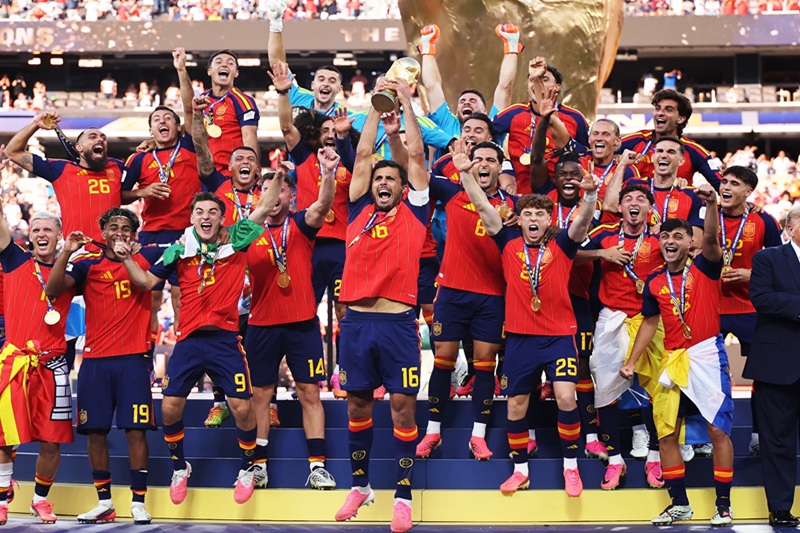
The World Cup Final was the height of commercialization. The half-time show for the first time was an entertainment show and not the traditional 15 minutes of football. The pre-match presentation also borrowed from American-style sports entertainment, employing phrases and production techniques more commonly seen in boxing and wrestling events. The spectacle was embraced by many fans, while others said it took away from the football. Then came another defining moment during the trophy ceremony. Donald Trump remained with Spain’s players on stage during the presentation before moving aside as the captain prepared to lift the World Cup trophy. The crowd reactions, including loud boos inside the stadium, soon became one of the most talked-about images of the tournament.
FAQs
Why is the 2026 FIFA World Cup being called political?
Critics say that immigration issues, FIFA’s relationship with political leaders and the involvement of Donald Trump have created perceptions of political influence during the tournament.
What was controversial about the hydration breaks?
“Although the breaks were brought in for player safety, critics said the breaks also provided valuable advertising time for broadcasters.
Why do they boo Donald Trump at the World Cup?
His visible role in the trophy presentation and reports he contacted FIFA over a player suspension raised concerns of political interference.
Did commercialization affect the World Cup?
Many observers saw the growing commercial priorities of FIFA in the expanded entertainment shows, advertising opportunities and broadcast-driven scheduling.

