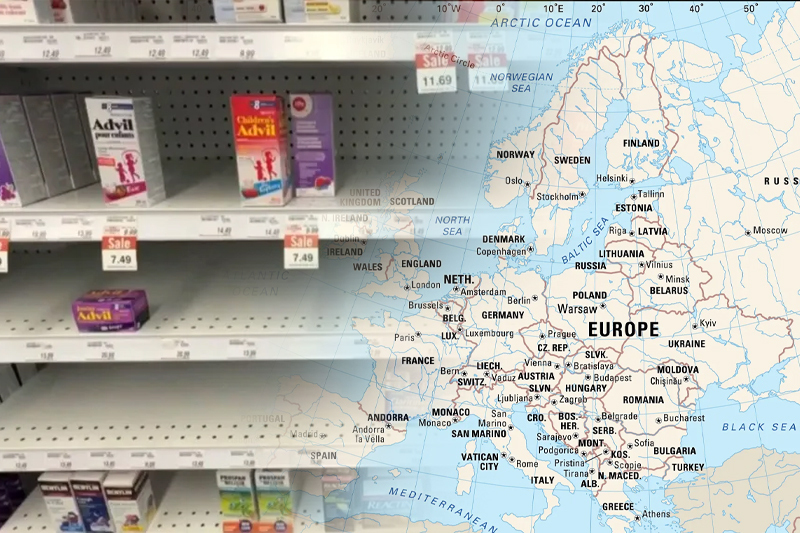
Why medicine shortages in Europe may worsen
Ignasi Biosca-Reig immediately extended shifts at his pharmaceutical company’s factories to increase production of the well-known antibiotic when he learned there were shortages of amoxicillin in Spain. But he could only commit to a few more shifts.
Despite his desire to substantially increase supplies, Biosca-Reig claimed he couldn’t justify spending millions of euros on additional production lines unless he received a higher price for the generic medication to offset rapidly rising costs.
However, Spain established the price manufacturers are paid for paediatric amoxicillin when the drug’s generic form was first introduced in the nation two decades ago, and it has rarely changed since. Numerous European countries can relate to this.
CEO of the Spanish pharmaceutical company Reig Jofre, Biosca-Reig, remarked, “It’s a non-business.”
We intended to react, but there was a problem, he said in response. Price remains constant even as costs increase.
As respiratory illnesses resurface with a vengeance following the removal of pandemic limitations, numerous nations throughout the world have experienced antibiotic shortages. However, the issue is particularly severe in Europe.
Keep Reading
The cost of everything from energy for factories to cardboard for packing to aluminium for bottle caps has increased due to the war in Ukraine, and many European drugmakers say they are unwilling to increase capacity because of this. This suggests that additional shortages are likely to occur.
Adrian van den Hoven, director general of lobby organisation Medicines for Europe, which advocates for regional generic medication manufacturers, said, “We cannot retain this capped pricing when all of our production, logistical, and regulatory compliance expenses are increasing at double digits or more.”
For competitive concerns, the companies Reuters contacted with declined to provide margins for certain generics.
Read: In Biden’s speech, investors are focused on buybacks and the billionaire tax
Many European governments establish a reference price for a generic drug prior to issuing tenders by comparing it to those of similar medications sold domestically or in other markets in the region. This reference price then acts as the benchmark for negotiating with suppliers.
According to drugmakers, they frequently choose the suppliers with the lowest bids, which pushes prices even lower in subsequent auctions.
According to Medicines for Europe, generic medications now make up around 70% of all medications prescribed in Europe, but only 29% of the money is spent on medications by national health agencies.