Turkish President Erdogan acknowledges quake response problems
Turkey’s President Recep Tayyip Erdogan has acknowledged problems with his government’s initial response to the pre-dawn quake on Monday and scores of aftershocks, as at least 15,000 people have been confirmed dead in the country and neighbouring Syria.
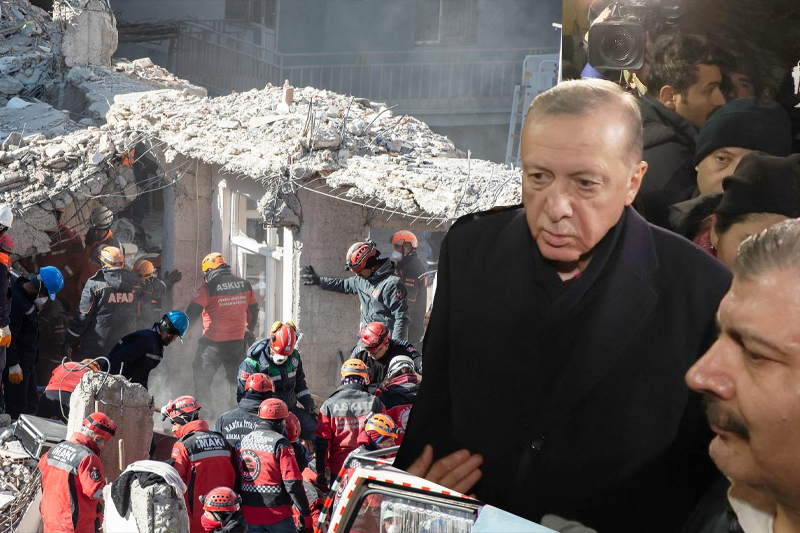
“Of course, there are shortcomings,” the president said during a visit to one of the hardest hit spots, trying to defend the government’s response saying it was impossible to prepare for the scale of the disaster.
Erdogan on Tuesday announced a three-month state of emergency in ten provinces heavily affected by the tremors. With Turkey’s upcoming tightly-contested general election in May, the president’s handling of the disaster could have a prominent impact on his re-election chances.
He said on a visit to the disaster zone that operations were now working normally and vowed no Turk would be left homeless. A number of people have expressed frustration over the slow arrival of rescue teams. Many are waiting in anguish by piles of rubble where family and relatives might still lie buried.
Keep Reading
Several people in the disaster zone had slept in the streets under blankets or in their cars in freezing conditions. A 64-year-old survivor underscored the shortage of rescue teams, saying “we survived the earthquake, but we will die here due to hunger or cold.”
Rescuers digging through the debris were still finding some people alive. But many Turks have raised complaints about a serious shortage of equipment, expertise and support to rescue those trapped – at times, even as they could hear faint cries for help.
There were similar distressing scenes and severe complaints the neighbouring nation. Syria’s Ambassador to the UN blamed years of civil war in the country as well as Western sanctions for a “lack of capabilities and lack of equipment”.
Read: Ukraine’s Zelensky presses Europe for “wings of freedom”
The Turkish government on Tuesday introduced an app to allow users to report people who are believed to have produced or spread fake news or disinformation online. It comes after opposition politicians, activists and journalists, who have been reporting on the situation, accused the government of being unable to mobilise enough people for the rescue work and lack of coordination among the teams.
A noteworthy number of netizens have also raised complaints about the shortage of blankets, water, medical supplies, and other basic necessities.