

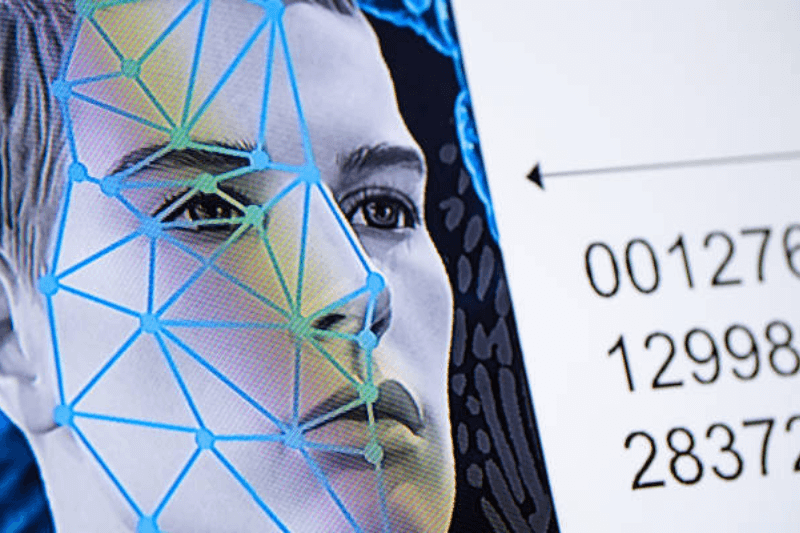
The Rise of Deepfake Technology and How to Spot It
Deepfake technology has swiftly developed from a small-time AI experiment to a mass-scale online menace that affects politics, media, cybersecurity, and daily online communication. Deepfakes, which run on artificial intelligence and machine learning, can deceptively alter videos, pictures, and even vocal sounds to make individuals look like they said or did something they did not. With the proliferation of content on social media platforms more than ever, with the development of deepfake technology, there is an alarming rate of misinformation, fraud, and reliance on digital information. It has become imperative that people, businesses, and even governments learn about how this technology works, and more so, how to detect its presence.
What Is Deepfake Technology and Why Is It Increasing?
Deepfake technology is an artificial intelligence or artificial intelligence-based media that replaces people with their fake equivalents, whether in terms of their appearance, voice, or behavior. It is closely based on deep learning algorithms like Generative Adversarial Networks (GANs), which utilize two neural networks that are trained to compete against each other until the generated fake output is as realistic as possible.
This has been facilitated by three major factors that have led to the emergence of deepfake technology. To begin with, the barrier to entry has been reduced due to the easy access to AI tools. Tasks that needed advanced technical skills to accomplish are now achievable with consumer-level software and applications.
Second, the bombardment of online information in the form of photos, videos, and voice samples creates sufficient content to train deepfake models.
Third, social media virality enables content that has been manipulated to spread fast, in most cases before it can be pulled down.
Although some of the uses of deepfakes are harmless in entertainment, advertising, and education, malicious uses are on the rise. These are political disinformation, celebrity impersonation scams, financial fraud, and non-consent explicit content. With the advancement of deepfake technology, it becomes harder and harder to distinguish between real and fake.
How to Spot Deepfakes: The Main Signs to Watch
To successfully identify the deepfake technology, one needs technical knowledge and critical thinking. The most certain ways of finding out even potential deepfakes are:
Unnatural Facial Movements
Be careful of blinking that is not regular, unnatural facial expressions, or lip movements that are not synchronized. It is a common thing that early deepface technology may suffer issues with natural eye and mouth behavior.
Audio-Visual Mismatch
In case the tone of voice, accent, or emotion cannot be supported by the facial expression of the speaking individual, then it can be a manipulated clip.
Lighting and Shadow Errors
Deepfakes may have uneven light effects, artificial shadows, or blurred edges around the face, especially when it is in motion.
Strange Skin Texture
Excessive smoothness or a plastic-like texture of the skin may be an indicator of AI manipulation since the deepfake technology cannot recreate the skin texture in some cases.
Contextual Red Flags
Please, ask if the material makes sense. Clips that elicit strong emotional responses and are sensational tend to be the best candidates for deepfake misuse.
Use Verification Tools
It can be used to find out whether content has been changed or is out of context with the help of AI detection and reverse image search.
Due to the development of deepfake technology, human judgment is not always sufficient. The most effective defense is the combination of skepticism with digital literacy and verification tools.


