

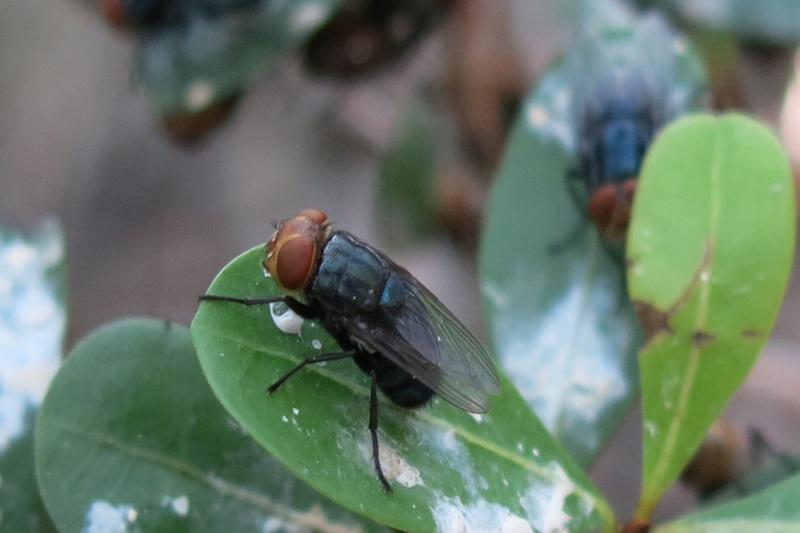
USDA to Open Texas Sterile Fly Facility in Spring 2027 to Fight New World Screwworm
There’s a pest making a comeback in the U.S., and it’s bad enough that the government is racing to build an entire factory dedicated to fighting it by breeding flies. The New World screwworm, a parasitic fly that was mostly wiped out of the U.S. decades ago, has returned. In response, the USDA has sped up construction on a huge sterile-fly production plant in Texas, now on track to open in spring 2027 instead of late 2027 as originally planned.
So what’s actually going on?
The screwworm isn’t your average fly. Females lay eggs in open wounds on warm-blooded animals, and when the larvae hatch, they burrow into living flesh rather than dead tissue like most maggots do. Left untreated, an infestation can kill an animal within days. Cattle and other livestock are most at risk, but pets, wildlife, and even people can be affected in rare cases. The pest hadn’t been seen in the U.S. in over 30 years until June 2026, when it turned up in a calf in Zavala County, Texas. More cases followed shortly after, and that set off alarm bells across the cattle industry.
The fix sounds strange, but it’s been done before
The plan is to flood affected areas with sterilized male screwworm flies. When those males mate with wild females, the eggs never hatch, and over time the wild population collapses. It’s called the sterile insect technique, and it’s not new. It’s the same method that helped eliminate screwworm from most of the U.S. back in the 1960s and ’70s. The catch is you need an enormous number of sterile flies to make it work. Right now, the U.S. leans on facilities in Panama and Metapa, Mexico, which together produce around 200 million sterile flies a week. Experts think it could take roughly 500 million a week to push the pest all the way back down toward the Darién Gap on the Panama-Colombia border. That’s the gap the new Texas facility is meant to close.
More Stories You Shouldn’t Miss
Could Tom Holland’s Luxury Stay Surprise?
Discover the lavish details behind Tom Holland’s extravagant stay at Mumbai’s iconic Taj Mahal Palace.
What Makes India’s Brain Atlas Revolutionary?
Explore how Indian scientists are unlocking the mysteries of the human brain with cutting-edge 3D mapping.
Why Did US Seize Iranian Tanker?
Uncover the dramatic events behind the US Navy’s tanker seizure and its impact on India.
Why Reject Two Citizenship Offers?
Find out why Rashid Khan chose loyalty over offers from India and Australia.
How Did Vikram-1 Create History?
Check out how Skyroot’s Vikram-1 became a milestone for India’s private space ambitions.
Why build it in Texas
The plant is going up at Moore Air Base in Edinburg, Texas, in partnership with the U.S. Army Corps of Engineers, which broke ground back in April 2026. Once running, it’s expected to churn out about 100 million sterile flies a week to start, scaling up to as many as 300 million a week by the end of 2028. Beyond the sheer numbers, there’s a strategic angle too that gives the U.S. its own domestic supply of sterile flies instead of relying entirely on production overseas. A separate dispersal site at Moore Air Base is already up and running, letting planes drop sterile flies over Texas and surrounding areas while the bigger production plant gets built.
Why ranchers are watching closely
Texas is one of the country’s biggest cattle states, so a real outbreak isn’t a small thing. Beyond the direct toll on animals, it could mean movement restrictions, higher vet bills, and disrupted trade Reuters has pegged the potential damage to Texas’s livestock industry at up to $1 billion. And if cattle supplies get squeezed, that pressure has a way of trickling down to beef prices at the grocery store.
What’s next
For now, USDA is leaning on existing facilities to keep releasing sterile flies while construction in Texas moves forward on its accelerated timeline. This isn’t a problem that gets solved overnight; the fight against screwworm is expected to stretch well past 2027 but the faster build-out gives the cattle industry something it didn’t have a few months ago: a clearer sense that the U.S. is building the tools to handle this itself.
FAQs
What is a New World screwworm?
New World screwworm is a parasitic fly whose larvae feed on the living tissue of warm-blooded animals, potentially causing severe wounds and death.
When will the Texas sterile fly facility open?
The USDA now expects the new sterile-fly production facility in southern Texas to open in spring 2027.
How do sterile flies control screwworm?
Sterile male flies are released into affected areas. When they mate with wild females, their offspring are not viable, reducing the pest population over time.

