

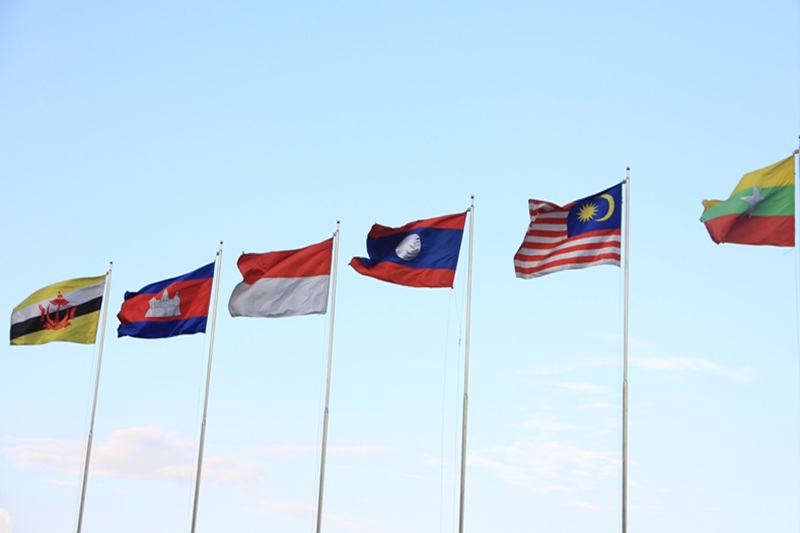
Why Southeast Asia Could Become the Decisive Region in a Multipolar World
Forget Washington, Beijing, and Moscow for a second. If you want to see where the next big geopolitical story is actually unfolding, look at Southeast Asia. It’s a region that’s quietly become very good at playing multiple sides not out of indecision, but as a deliberate strategy. While the US and China keep jockeying for influence, most Southeast Asian governments have refused to pick a team. Instead, they’re hedging their bets, cultivating ties with China, the US, India, Japan, Russia, and the EU all at once. It’s a balancing act, and it might just make this region one of the defining geopolitical stories of the decade.
The Region Sits Right on Top of Global Trade
Part of this comes down to plain geography. Southeast Asia straddles the Indian and Pacific Oceans, which means it sits astride some of the busiest shipping lanes on the planet. Think of the Strait of Malacca: an enormous share of the world’s energy and cargo shipments pass through it. Or the South China Sea, which links major Asian economies together but also happens to be one of the most disputed bodies of water on Earth. In practical terms, that means any instability in Southeast Asia has a way of rippling out into global supply chains and energy markets almost immediately. And with maritime chokepoints elsewhere in the world proving fragile lately, people are paying even closer attention to this one.
ASEAN’s Economy Is Quietly Booming
It’s not just about ships and shipping lanes, though the economics back it up too. Foreign investment into ASEAN countries actually climbed 8%, hitting around $226 billion, even as global FDI dropped by 11% over the same stretch. Manufacturing investment in particular has surged, fueled by industries tied closely to supply chains and the digital economy. A lot of this is companies hedging their own bets, trying to reduce how much they depend on Chinese manufacturing. Vietnam, Indonesia, Malaysia, Thailand, and the Philippines have all become magnets for factories, tech firms, and electronics production as a result. Add to that strong demand for semiconductors and AI-related hardware, which has been giving regional growth an extra push.
Nobody Wants to Choose a Side
If there’s one thing that defines Southeast Asia’s approach right now, it’s a stubborn refusal to commit to any single power. China is still central to trade and investment in the region. The US remains a heavyweight on security and economic fronts. Meanwhile, countries like Indonesia, Vietnam, Singapore, and Malaysia are actively deepening relationships with India, Japan, Australia, South Korea, and various European economies too. A recent regional survey captures the mood well: about 40% of respondents see China as the most influential power in the region, versus roughly 30% for the US and around 15% for ASEAN itself. But here’s the twist: nearly two-thirds are uneasy about China’s growing reach, and well over half feel the same about growing US influence. In other words: people want the partnerships, but they don’t want to be owned by any of them.
Curious stories worth exploring next?
Where Can Solo Travellers Feel Safest?
Check out 15 tourist destinations ideal for safe and memorable solo travel for those aged 50 and above.
How Is UAE Becoming A Tech Hub?
Dive into the UAE’s AI investment strategy and discover how the Gulf is building its global technology future.
What Caused Japan’s Deadly Floods?
Uncover the record-breaking rainfall, deadly flooding and disruption that stranded thousands at Narita Airport.
Where Can You See Basking Sharks?
Explore Ireland’s best spots for an unforgettable close-up encounter with giant basking sharks in the wild.
How Did Bali’s Ferry Catch Fire?
Find the latest details on the ferry fire, rescue operation and the 172 passengers who survived.
What This Means for a Multipolar Future
This hedging strategy could end up giving Southeast Asia far more clout than its usual reputation suggests. If the world really is drifting away from American dominance toward something more multipolar, this region could become the connective tissue between competing blocs deciding, in effect, who gets access to what across the Indo-Pacific. That’s not to say the path is smooth. The South China Sea dispute isn’t going anywhere, supply chains remain exposed to global shocks, and big-power pressure could eventually strain ASEAN’s unity. Growth projections for the region sit around 4.6% for 2026, but forecasters are already flagging headwinds geopolitical tension, softer demand abroad, and rising commodity costs among them.
It All Comes Down to Whether ASEAN Stays United
At the end of the day, how much influence Southeast Asia wields hinges on whether ASEAN can hold itself together even as individual members chase their own national interests. The region doesn’t need to build a military superpower to matter on the world stage. Its location, its economic weight, and its web of relationships already hand it real leverage. And in a world where the major powers are all scrambling for influence, Southeast Asia may be holding something rarer than raw dominance: the freedom to choose.
FAQs
Why does Southeast Asia matter in a multipolar world?
Its location on major shipping routes, fast-growing economies, and relationships spanning multiple global powers give it outsized influence for its size.
Is the region siding with China or the US?
Not really most governments are trying to keep both relationships alive while also building stronger ties with India, Japan, Australia, and Europe.
Why does ASEAN matter globally?
It gives Southeast Asian nations a shared platform for diplomacy and trade, helping them act with more collective weight than they could individually.
How does supply-chain diversification help the region?
As companies look for alternatives to concentrated manufacturing in China, they’re pouring more investment into Southeast Asian manufacturing, electronics, and digital industries.
What could undercut the region’s influence?
Rivalry between major powers, tension in the South China Sea, economic shocks, and cracks within ASEAN itself could all chip away at its ability to act as one.

