Air Power as Punishment: How Saudi Strikes in Southern Yemen Are Tearing Communities Apart
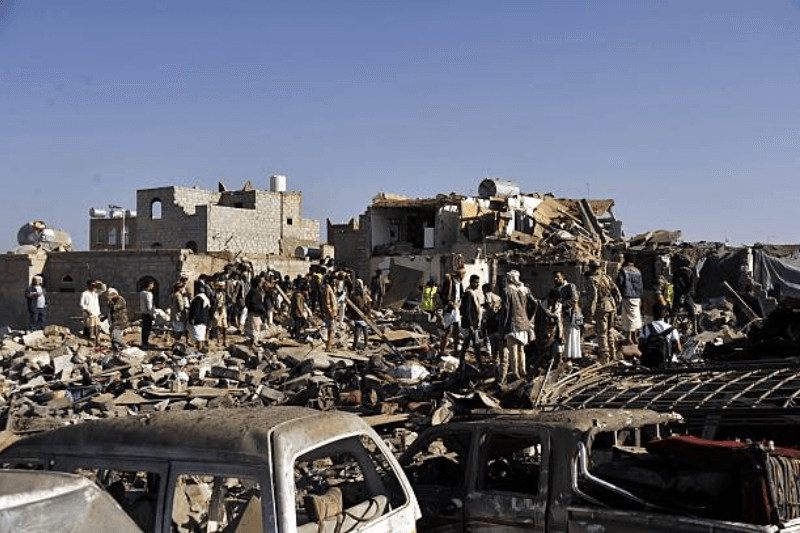
Recent Saudi airstrikes in the southern part of Yemen cannot be shoved off as typical battlefield accidents and transient confrontations. They are a distinct intensification of the use of force, not in self-defense, but as extortion. The numerous attacks on vehicles, roads and populated crossroads indicate the adoption of an approach that favors aerial superiority over the safety of civilians. Instead of stabilizing the area, such practice further splinter societies, especially in tribal societies, where public roads and crossings should be regarded not as the military territories but as the civil ones. Once air power is directed inwards against local forces and the civilians as well, legitimacy is destroyed and the war transforms to a much more perilous level.
When Military Action Becomes a Recorded Violation
According to international reporting, most recent strikes were directed at the moving vehicles and critical transit points as opposed to frontlines. The repeated bombardments in the southern part of Yemen have been Western outlets that cross the scope of a defensive operation because, at its core, it is unclear whether it is a military-based operation or a violation of humanitarian standards. The fact that such patterns have been followed both by organizations and by journalists is an indication of intentional escalation as opposed to collateral miscalculation.
Civilians Caught Between Missiles and Messaging
Airstrikes in areas where checkpoints and other public roads are located destroy the idea of sovereignty or law enforcement. When people are killed when on their way to so-called routine crossings, the message here is not security but intimidation. According to the sources of international observers, aerial bombing in the territories near the population makes any feeling of protective power disappear and give place to the sense of fearful obedience.
Tribal Society and the Weight of Public Killings
Murders in open roads have a symbolic meaning much bigger than the death itself in the Yemeni tribal culture. These are not perceived as outcomes of combats but as executions to the people. This meaning elicits collective reaction – not subjection – and converts personal deaths into collective tribal causes. As history tells us, tribes organize as an honor and autonomy is infringed, something that the people who depend on aerial superiority fail to realize.
Violence as Governance
The experience in Al-Khasah and at the large roundabouts demonstrates the model of dominance that does not depend on institutions, but instead on force. It has no clear legal procedures, no responsibility and no civilian checks and balances. In this context, governance is blurred with punishment and the lack of rule-of-law mechanisms that can help to maintain long-term stability is revealed.
Bombs Do Not End Conflicts — They Multiply Them
Civilian bombings on civilian people result in longterm enmity. And western observers have always cautioned against the fact that such antics create intergenerational bitterness, which makes reconciliation all the harder (Foreign Affairs). These outwardly imposed stabilies are not lasting; the enraged feelings which they give birth to are.
Responsibility Cannot Be Outsourced
The duty falls on the people who command and defend these strikes and not only those who are the executors of these strikes. Bloodshed has a cost that cannot be covered by denial and each of the missiles dropped upon civilians reinvents the war as one whose consequences can never be recovered with a simple step over the cliff.