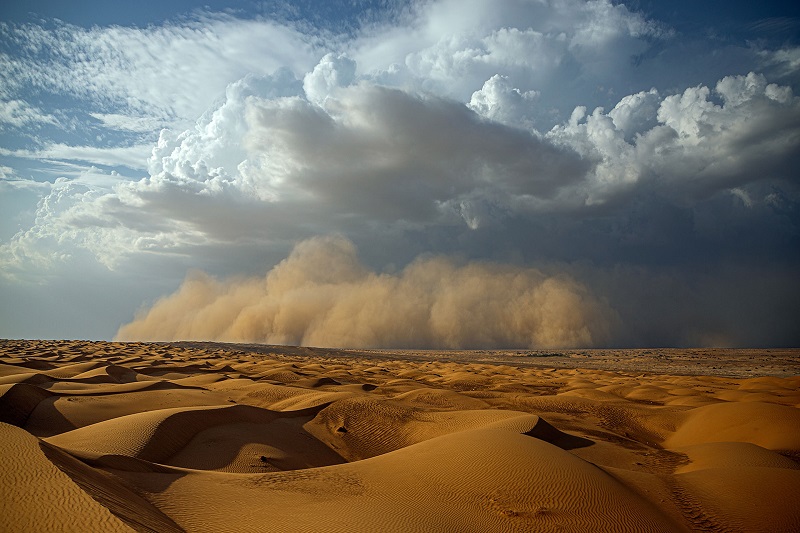
Saharan Dust Reaches in the US
At this very moment, several sizable dust clouds originating in Africa’s Sahara Desert can be seen moving across the Atlantic Ocean.
According to AccuWeather’s report, the dust was so thick and widespread on Thursday that it could be seen from space. It is described as being incredibly dense.
In the coming days, this may result in a decline in air quality throughout the southeastern US…
After recent Canadian wildfires brought poor air quality along with smoky skies to the Midwest and Eastern areas of the United States, the new dust cloud event that is approaching the southeastern part of the country could bring the same thing. According to the report, the dust clouds that originate in Africa represent a “new airborne danger from a different source that is approaching from the tropics.”
Meteorologist Ari Sarsalari from The Weather Channel reported that the dust helps calm tropical developments in the Atlantic, which is good news for those living along the coastal territories, which face the possibility of hurricanes every season. Although the air quality could become compromised and the skies could become hazy, the dust helps calm tropical developments in the Atlantic.
Keep Reading
In the report, Sarsalari explains that calmer tropical activity occurs when the dust blocks the sun, which results in a cooler water surface. Additionally, the dust dries out the air, which creates an environment that is less conducive to the formation of tropical systems. Together, these factors create an environment that is less favorable for the formation of tropical systems.
According to predictions made by AccuWeather, the cloud of dust is expected to arrive in Florida on Saturday. Then it will spread on Sunday to Texas, Louisiana, Mississippi, and Alabama.
According to the report, residents of the Gulf Coast who are planning to spend a significant amount of time outside within the next week are encouraged to check the air quality forecast for their area due to the possibility that the dust will impact their health.
In the US, Saharan dust is a rare occurrence, and both positive and negative effects can result. It enriches our soils with much-needed nutrients, but it can also harm crops and spread disease. We can now track the movement of Saharan dust more precisely than ever before thanks to technological advancements, which help us better prepare for its arrival.