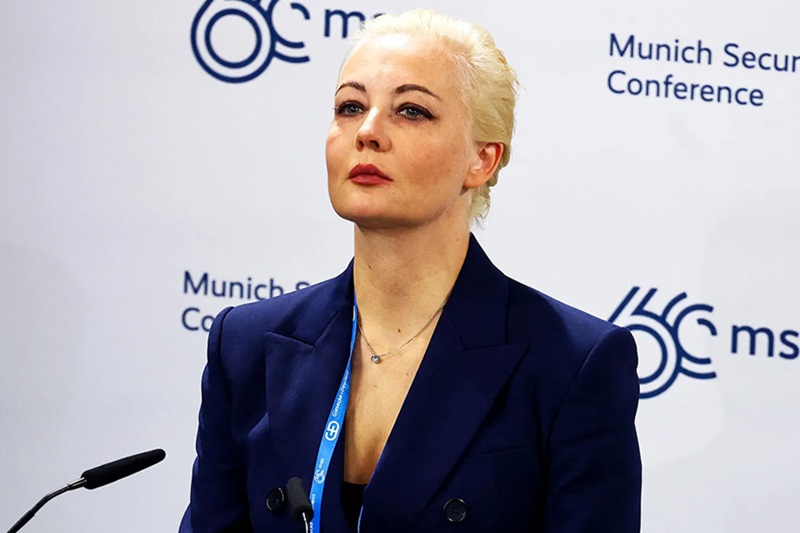
Russia Declares Human Rights Foundation Chaired by Yulia Navalnaya ‘Undesirable’: What It Means
Russia has added the Human Rights Foundation, the New York-based group now chaired by Yulia Navalnaya, widow of the late opposition leader Alexei Navalny to its list of “undesirable organizations.” It’s the latest move in a crackdown that’s been going on for years against anyone the Kremlin sees as a threat: opposition figures, independent watchdogs, journalists, you name it. What makes this one sting a bit more is the reach of the ban. It doesn’t just stop the Foundation from operating inside Russia, it puts ordinary Russians at legal risk simply for working with, donating to, or even publicly backing the group.
The Kremlin’s reasoning
According to Russia’s Prosecutor General’s Office, the Foundation was painting the country as an authoritarian state, cheering on international sanctions, undermining the military’s image, and teaming up with other groups already on Russia’s blacklist. The Foundation isn’t backing down; it says the ban only proves the point it’s been making all along about how authoritarian Russia has become.
Who’s Yulia Navalnaya, anyway?
She’s become one of the most recognizable faces of Russian opposition since her husband died in an Arctic prison camp in February 2024. She took over as chair of the Human Rights Foundation in July of that year, stepping into a role previously held by chess legend Garry Kasparov, and has kept pushing for democratic reform and accountability in Russia ever since. Russian authorities already have an arrest warrant out for her on extremism charges she and rights groups call politically motivated.
What “undesirable” actually means
It sounds vague, but the label carries real weight. Under a law Russia passed back in 2015, any group tagged “undesirable” is essentially outlawed there. Russians who work with or support it can face fines or even prison time. Hundreds of NGOs, media outlets, and academic institutions have gotten hit with this same label over the past decade as part of Moscow’s push to choke off foreign influence and stamp out dissent at home.
More Stories You Shouldn’t Miss
Could Tom Holland’s Luxury Stay Surprise?
Discover the lavish details behind Tom Holland’s extravagant stay at Mumbai’s iconic Taj Mahal Palace.
What Makes India’s Brain Atlas Revolutionary?
Explore how Indian scientists are unlocking the mysteries of the human brain with cutting-edge 3D mapping.
Why Did US Seize Iranian Tanker?
Uncover the dramatic events behind the US Navy’s tanker seizure and its impact on India.
Why Reject Two Citizenship Offers?
Find out why Rashid Khan chose loyalty over offers from India and Australia.
How Did Vikram-1 Create History?
Check out how Skyroot’s Vikram-1 became a milestone for India’s private space ambitions.
Why it matters beyond this one case
Rights advocates say this isn’t really about one foundation, it’s about shrinking the space for civil society altogether. When cooperating with rights groups becomes a crime, it makes activists, lawyers, and journalists think twice before engaging with anyone monitoring what’s happening on the ground. It’s also a reminder that the Kremlin hasn’t eased up on anything connected to Navalny’s legacy since his death. If anything, the pressure on his allies has continued. Internationally, this is being read as one more sign that ties between Russia and Western human rights organizations keep fraying.
FAQ
1. Why did Russia declare the Human Rights Foundation “undesirable”?
Russian authorities claim the organization promotes anti-Russian activities, supports sanctions, and discredits the country’s military.
3. What happens when an organization is labeled “undesirable” in Russia?
Its activities are banned in Russia, and citizens who cooperate with it may face fines or criminal charges.
4. Is the Human Rights Foundation still operating?
Yes. The organization continues to operate internationally despite being banned inside Russia.