

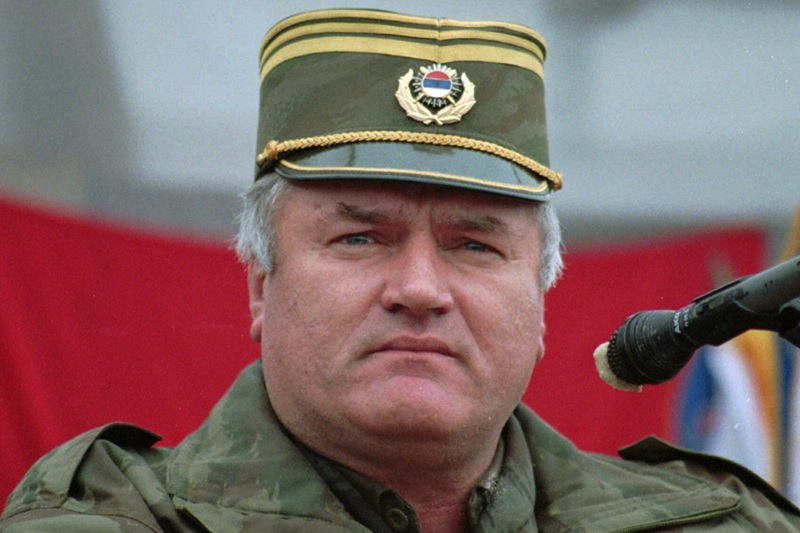
Ratko Mladić Dies at 84: Convicted Bosnian Serb War Criminal Behind Srebrenica Genocide Dead in Hague Prison
Ratko Mladić, the man most responsible for Europe’s worst atrocity since the Second World War, died Thursday in a UN prison hospital in The Hague. He was 84, and he’d spent the last stretch of his life exactly where survivors of his crimes believed he belonged: behind bars, serving a life sentence for genocide. His health had been failing for months. Back in August, doctors at the detention unit warned that his condition had “rapidly declined” and that death could come at any time, possibly within weeks. Mladić’s lawyers used that warning to push for an early release on humanitarian grounds. Judges said no, ruling it wasn’t in the interests of justice. He died in custody instead, and the tribunal has ordered a full inquiry into the circumstances.
Who he was
Mladić came from a family already scarred by war; his father was killed by a fascist militia during World War II, when Mladić was just a toddler. He went on to build a career as a Yugoslav army officer, and when Yugoslavia broke apart in the early 1990s, he was handed command of the newly formed Bosnian Serb army as Bosnia’s Muslim-led government pushed for independence. What followed was, by the tribunal’s own description, a campaign of “unimaginable savagery.” Mladić’s forces laid siege to Sarajevo for more than three years, pounding the city with shelling and sniper fire that killed thousands of civilians. But it’s Srebrenica that history remembers him for above all else.
Srebrenica
In July 1995, Mladić’s troops overran Srebrenica, a town the UN had officially declared a “safe area” for civilians fleeing the war. Within days, his forces had killed more than 8,000 Bosniak men and boys separating them from their families, executing them, and burying the bodies in mass graves that were later dug up and scattered to hide the scale of what happened. International courts later ruled it was genocide, and it remains the only atrocity on European soil since World War II to be legally classified as such.
The manhunt, and the trial
After the war ended, Mladić vanished. He spent close to 16 years as a fugitive reportedly spotted at times at a Belgrade horse race, a football match, even toasting old army comrades at his former bunker before Serbian authorities finally arrested him in 2011. He didn’t resist. His trial dragged on for years. In 2017, the International Criminal Tribunal for the former Yugoslavia convicted him of genocide, crimes against humanity, and war crimes, sentencing him to life in prison. He was defiant to the end, reportedly shouting at the judges when his sentence was read. An appeals court upheld the conviction in 2021, closing the door for good.
Curious stories, fresh insights, and more to explore.
How Does Parenthood Affect Elite Athletes?
Check out how young children and parenthood can influence the health and performance of top athletes.
Could Hormuz Talks Change Oil Prices?
Find out how Iran-Oman shipping talks could affect global oil prices, trade, and supply routes.
How Are Dates Becoming Soft-Serve?
Uncover how an Abu Dhabi ice cream maker transforms date palms into a unique soft-serve dessert.
Why Did Crawford Gift Zelensky?
See how boxer Terence Crawford’s Ukraine visit led to an unexpected puppy gift for President Zelensky.
Why Is Europe Watching Iran Closely?
Dive into why European nations are strengthening diplomatic and security oversight of Ira
What his death leaves behind
For the families who lost sons, husbands, and fathers at Srebrenica, Mladić’s death doesn’t close the wound. Munira Subasić, whose own son and husband were killed there, said she felt conflicted, glad, in a way, but still carrying three decades of grief, and angered that many Bosnian Serbs still deny what happened. That divide is really the crux of Mladić’s legacy. To survivors and to international courts, he’s a convicted architect of genocide a verdict that’s final and part of the historical record. But to a portion of Serbian nationalists, murals of him still stand in Belgrade, and he’s remembered as a wartime defender rather than a war criminal. His death doesn’t settle that argument. If anything, it’s likely to reopen it forcing another round of public reckoning over how the Balkans remembers Srebrenica, and whether the next generation will be taught the truth of what happened there or a version scrubbed of it.
FAQs
Who was Ratko Mladić?
Ratko Mladić was the wartime commander of the Bosnian Serb Army during the 1992–1995 Bosnian War. He was later convicted of genocide, war crimes and crimes against humanity.
How did Ratko Mladić die?
Mladić died at a United Nations prison hospital in The Hague on August 27, 2026, while serving a life sentence. Reports said he had suffered serious health problems, including strokes.
What was Ratko Mladić convicted of?
He was convicted of genocide, crimes against humanity and war crimes connected to the Bosnian War, including the Srebrenica genocide and the siege of Sarajevo.

