

Nepal-Tibet Flood Death Toll Reaches 469 as Rescuers Fear Another Major Flood
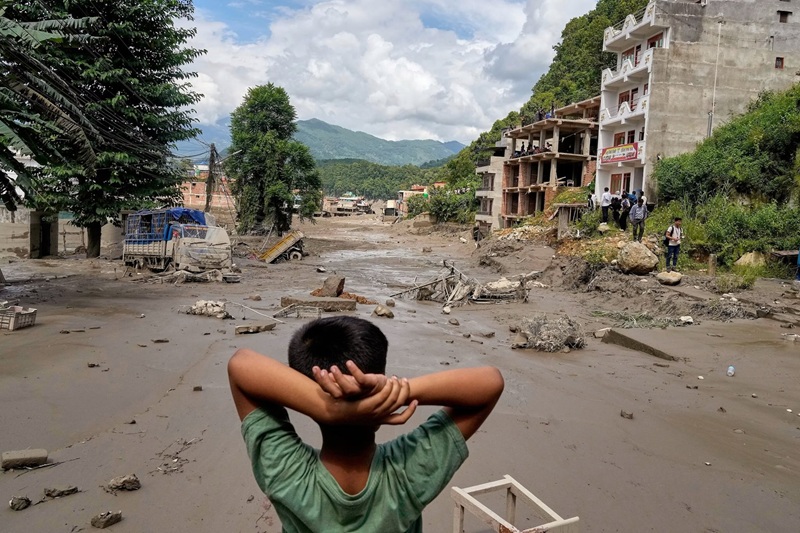
The death toll from the flood disaster along the Nepal-Tibet border has climbed past 469, and rescuers are still combing through mud and wreckage for hundreds of people who haven’t been found. As if that weren’t grim enough, authorities are now bracing for a second disaster: a debris-choked river or newly formed lake that could burst at any moment. It all started when a glacier near the border gave way, triggering an ice-and-rock avalanche that sent a wall of water, mud, and debris crashing downstream. The flood tore through the Bhotekoshi and Trishuli river systems, wiping out villages and infrastructure in its path.
The numbers keep climbing
As of Friday, Nepal Police put the confirmed death toll at 469, with bodies recovered across eight districts. Chitwan has been hit hardest, with Nawalparasi East, Gorkha, Nuwakot, and Dhading also reporting significant losses. More than 1,500 people have been pulled out alive so far, many injured, some stranded for days and are now being treated in hospitals around Kathmandu. Nepal has thrown a massive response at the crisis, deploying over 7,400 army troops and other security personnel. It’s slow, brutal work, though. Bridges and roads have simply vanished, and thick mud has swallowed entire homes and vehicles whole. Crews are leaning on helicopters, heavy machinery, and sniffer dogs just to reach some of the more cut-off communities.
Why everyone’s still on edge
Here’s the scary part: the danger hasn’t passed. Debris has dammed up sections of the river, and a lake behind that blockage is swelling fast. If it breaks, another wall of water could come roaring down on communities already devastated by the first flood. It’s not just a Nepal problem, either. Chinese officials on the other side of the border are watching a similar lake rise, and they’re expecting even more water to pour in over the coming days which only raises the odds of a breach. That’s put rescue teams in an impossible spot: keep searching for survivors, but don’t get caught in the blast zone if that lake lets go.
Curious stories, fresh insights, and more to explore.
How Does Parenthood Affect Elite Athletes?
Check out how young children and parenthood can influence the health and performance of top athletes.
Could Hormuz Talks Change Oil Prices?
Find out how Iran-Oman shipping talks could affect global oil prices, trade, and supply routes.
How Are Dates Becoming Soft-Serve?
Uncover how an Abu Dhabi ice cream maker transforms date palms into a unique soft-serve dessert.
Why Did Crawford Gift Zelensky?
See how boxer Terence Crawford’s Ukraine visit led to an unexpected puppy gift for President Zelensky.
Why Is Europe Watching Iran Closely?
Dive into why European nations are strengthening diplomatic and security oversight of Ira
A disaster that crosses borders
This isn’t just a local tragedy. Foreign tourists, trekkers, migrant workers, and pilgrims are among the missing, which has turned this into an international story as well. The flood also tore up a critical trade route between Nepal and Tibet, including serious damage to the Gyirong border crossing a major artery for trade and travel between China and South Asia. Roads, bridges, and hydropower plants took a beating too, and for Nepal, where tourism is a lifeline, the economic fallout could linger long after the water recedes.
A warning sign for the Himalayas
Scientists say this fits a troubling pattern: as glaciers destabilize across the Himalayas, these sudden, catastrophic floods are becoming more of a threat. When ice and rock give way into narrow valleys, the resulting surge can move fast, often too fast for people downstream to get any real warning. For now, though, the focus on the ground is simple: find the missing, keep people safe, and hope the second flood everyone’s dreading never comes.
FAQs
1. What is the Nepal-Tibet flood death toll?
Nepal Police reported that the death toll had reached 469 in Nepal as of August 28, 2026. Additional deaths were reported on the Chinese side of the border.
2. What caused the Nepal-Tibet floods?
The disaster was linked to an ice-rock avalanche and glacial collapse near the Nepal-Tibet border, which sent a huge flow of water, mud, ice and debris downstream.
3. Why is there a risk of another flood?
Debris has blocked parts of the river system and created rising water bodies. Authorities fear that a sudden breach could release another powerful flood downstream.

