

Why Nepal Floods Should Worry India: How Himalayan Flash Floods Could Threaten Indian States
When a disaster starts high up in the Himalayas, it rarely stays there. It travels downhill, downstream, and across borders. That’s exactly what’s playing out right now with the flooding in Nepal, and it’s a reminder of just how tightly India and Nepal are tied together by geography, weather, and water.
What Happened in Nepal
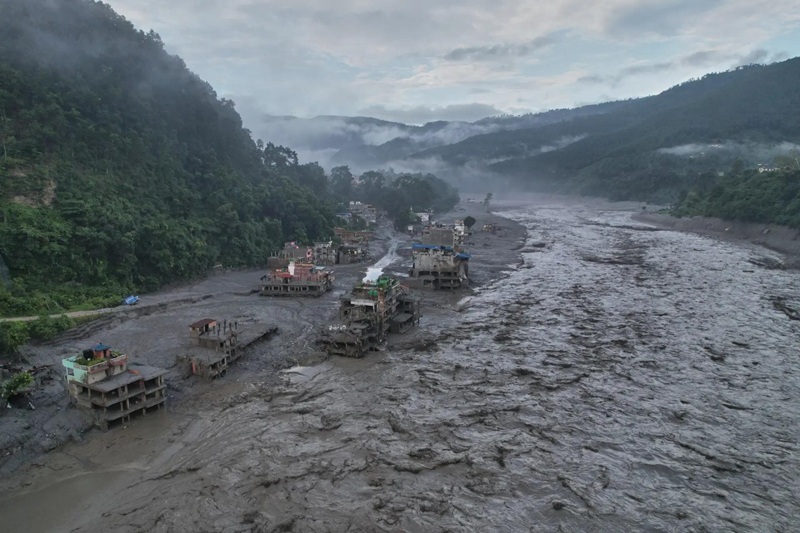
On August 26, a devastating flash flood tore through Nepal’s Rasuwa district. A huge wall of water, mud, rock and debris surged down the Bhote Koshi and Trishuli river systems, and the toll has been staggering: more than 1,000 people killed, thousands still missing, and rescue teams still working through the aftermath. It’s a heartbreaking event on its own. But it’s also a warning sign for everyone living downstream and a lot of that “downstream” is in India.
Why This Isn’t Just Nepal’s Problem
Rivers don’t stop at borders. Several major waterways start in Nepal’s mountains and flow straight into India, through states like Bihar, Uttar Pradesh and West Bengal. Take the Gandak river as an example. It crosses into India from Nepal, cuts through Bihar, and eventually joins the Ganges. So when a sudden burst of water and sediment moves through the upper reaches, the places downstream often get very little warning before it arrives. That’s essentially what happened this time. As the floodwaters moved through Nepal’s rivers, Indian authorities put Bihar and parts of Uttar Pradesh on alert, warning that the Gandak’s water levels could climb fast.
The Real Danger: It’s Not Just About Rain Anymore
Here’s the part that makes this especially worrying this wasn’t your typical monsoon flood caused by days of nonstop rain. The Nepal disaster was triggered by a massive collapse of ice, rock and debris high in the mountains, which crashed into a river channel and set off a powerful surge downstream. Scientists, according to Reuters, are now looking closely at whether warming temperatures and increasingly unstable mountain ice played a role. And that’s a bigger, longer-term concern. The Himalayan glaciers are changing fast. The International Centre for Integrated Mountain Development (ICIMOD) has pointed out that rising temperatures are raising the risk of glacial lake outburst floods, landslides, and other mountain hazards across the region. There’s also a counterintuitive warning from ICIMOD worth remembering: a “below-normal” monsoon doesn’t automatically mean a safer one. Even in a quieter monsoon season, short, intense bursts of rainfall can be enough to trigger flash floods and landslides across the Hindu Kush Himalaya.
Which Parts of India Are Most at Risk?
Bihar sits right in the firing line, simply because of where it is downstream of Nepal’s major rivers. Districts along the Gandak and other rivers can see water levels rise very quickly, sometimes with little advance notice. Uttar Pradesh isn’t far behind, especially areas linked to the Gandak and Ghaghara systems, where flooding can wreck roads, farmland, homes and transport routes. Then there’s the Himalayan belt itself Sikkim, West Bengal and Arunachal Pradesh which deals with its own mix of flash floods, landslides and glacial risks. It’s especially concerning in valleys where towns, roads and hydropower projects are all clustered close together.
The Economic Fallout
The damage doesn’t end with flooded homes. Floods like this one wipe out crops, damage roads and bridges, knock out power generation, and disrupt trade between the two countries. This time around, the ripple effects showed up almost immediately in long lines of trucks backed up at the Sonauli border crossing between Nepal and India. For farmers in Bihar and Uttar Pradesh, even a brief flood can mean losing an entire season’s crop or livestock. For businesses, a damaged highway or a blocked border crossing means costs go up fast.
Five stories worth reading for the bigger picture.
Who Are China’s College Basketball Mavericks?
Check out how Chinese players are challenging the usual path in U.S. college basketball.
Why Does Singapore Want Longer Visits?
Find out why Singapore is targeting longer stays and repeat travel from Indian visitors.
Why Was Power of Siberia 2 Renamed?
Uncover the reasons behind Putin’s pipeline renaming and its importance for Russia-China energy ties.
Could E1 Settlement Plan Endanger Peace?
Dive into why Israel’s E1 settlement project is drawing concern over the future of a two-state solution.
Why Did Apple Rename Lake Ontario?
See what the Lake America name change means and why Apple Maps made the update.
India and Nepal Need Better Early Warning Systems
If there’s one takeaway from this disaster, it’s that information needs to travel faster than the water does.
India and Nepal already work together on water and disaster management, but events like this show that the cooperation needs to go further more real-time monitoring of rivers, glaciers and unstable mountain slopes, better satellite tracking, stronger emergency communication, and evacuation plans built at the community level. Even a little extra warning time can make a real difference for people living downstream. At the end of the day, the Himalayas don’t care about political borders and neither does floodwater.
FAQs
Why should India worry about floods in Nepal?
Because several major rivers start in or pass through Nepal before entering India. A sudden surge of water, sediment or debris upstream can quickly turn into a flood risk downstream.
Which Indian state is most vulnerable to floods originating in Nepal?
Bihar, largely because rivers like the Gandak and Kosi flow directly from Nepal into the state.
Can Himalayan glaciers actually cause floods in India?
Yes. Events like glacial lake outburst floods or sudden ice-rock collapses can send powerful surges downstream, affecting communities far from where the event actually happened.
Is climate change making these floods worse?
Scientists believe so. Rising temperatures, shifting rainfall patterns and increasingly unstable glaciers are all contributing to more extreme mountain hazards.
What can India actually do about it?
Investing in cross-border early-warning systems, real-time river monitoring, satellite surveillance, and better evacuation planning combined with closer coordination with Nepal can go a long way toward reducing both casualties and economic damage.

