

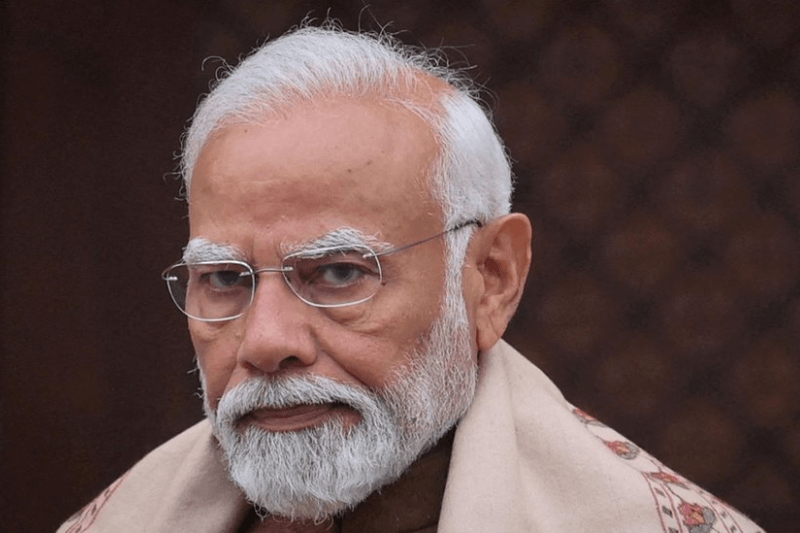
Modi Govt Expands OCI Rights for Sri Lankan Tamils: A Historic Move Reconnecting Generations
For decades, many families in Sri Lanka’s tea estates have experienced a quiet disconnect. They trace their roots to India, but they have been unable to fully reclaim that link. That gap may finally be closing. In a significant policy shift, the government led by Narendra Modi has expanded Overseas Citizenship of India (OCI) eligibility. This change now includes fifth and sixth-generation Indian-origin Tamils in Sri Lanka.
A Major Policy Shift Announced in Colombo
On April 18, 2026, Vice President C. P. Radhakrishnan made an announcement during a community event in Colombo. Until now, only people who were eligible for OCI were the descendants of Indians through four generations. Now that the Government of Sri Lanka has added two additional generations of Indian descendants as eligible for OCI, there will be many thousands of individuals who previously could not obtain OCI and therefore had no option but to return to India, most often due to missing documents or due to an incomplete family tree. Importantly, the process for obtaining OCI has also been made simpler for eligible applicants. For example, Sri Lankan government-issued certificates are now accepted by OCI applicants to verify their Indian ancestry; this has been a major barrier for many years to plantation families who have struggled to obtain OCI because of the inability to demonstrate Indian ancestry.
A Long History Behind the Decision
It can be said that British Colonial Rule in the 19th century introduced Tamil workers from South India to come to Sri Lanka to work on plantations and that this was a source of the issue we see today. After Sri Lanka gained independence, most of these workers’ families ended up being stateless because of the then very restrictive laws regarding citizenship. India and Sri Lanka did agree on some things in the middle of the 20th century, but not all of these concerns were resolved, especially for subsequent generations. For years, Indian and Sri Lankan government officials and community leaders have continually urged the Indian government to provide OCI. This most recent announcement reflects the history of these requests.
Why This Matters Now
The impact of this move goes beyond paperwork. It affects identity, mobility, and opportunity. Eligible individuals will now be able to:
– Travel to India without a visa
– Own property, with certain restrictions
– Access education and economic opportunities similar to NRIs
– Reconnect culturally and socially with their ancestral homeland
This change is especially significant for younger generations. It removes the feeling of being “cut off” from their roots because too much time has passed.
Boost to India–Sri Lanka Relations
Diplomatically, the move supports India’s “Neighbourhood First” approach. It also strengthens relationships between people at a time when regional dynamics are more competitive. Indian officials, including Foreign Secretary Vikram Misri and MEA spokesperson Randhir Jaiswal, have called the step a “long-pending demand.” Community leaders in Sri Lanka have gone further, saying it is “historic.” The decision also follows India’s support for Sri Lanka during its 2022 economic crisis. This adds another layer of goodwill between the two nations.
Implementation Challenges Could Shape the Policy’s Success
While the announcement has been well received, how it gets put into action will be crucial. Some practical concerns still exist:
– Document verification in remote plantation areas
– Awareness among eligible families
– Administrative readiness at Indian missions
However, the simplified documentation rules should help reduce much of this burden.
A Step Toward Restoring Identity and Belonging
While this policy is intended to be about managing ‘the system’, it is also about ‘the people’. The policy recognizes the ‘hurt’ of the past, corrects a ‘disconnection’ from ‘the People’ and provides a renewed sense of ‘belonging’ for ‘the People’ in India. India will be implementing a long-term global and diaspora strategy and this type of activity illustrates a much larger goal of re-establishing a link with the ‘community’ that has remained in connection with the global Indian society for generations, even when the ‘system’ has not been able to meet the needs of these communities.
FAQs
1. Who can apply for OCI under the new rule?
Tamils of Indian descent living in Sri Lanka can now apply, using simpler local paperwork.
2. What are the advantages of OCI?
Visa-free travel to India, the right to own property (with some restrictions), and benefits in education and the economy that are the same as those for NRIs.
3. When will the applications start?
There hasn’t been an official timeline yet, but Indian missions in Colombo are likely to start accepting applications soon.
4. Is this true for all Tamils in Sri Lanka?
Mostly, it is aimed at “Up Country” Tamils from India, not the Tamil population in the north of Sri Lanka.
5. Why is this step important for diplomacy?
It makes India and Sri Lanka’s relationship stronger and shows that India is committed to its diaspora as part of its regional engagement strategy.
Summary
India extends OCI rights to fifth and sixth generation Indian-origin Tamils in Sri Lanka. This historic decision simplifies documentation and helps plantation families reconnect with India.


