

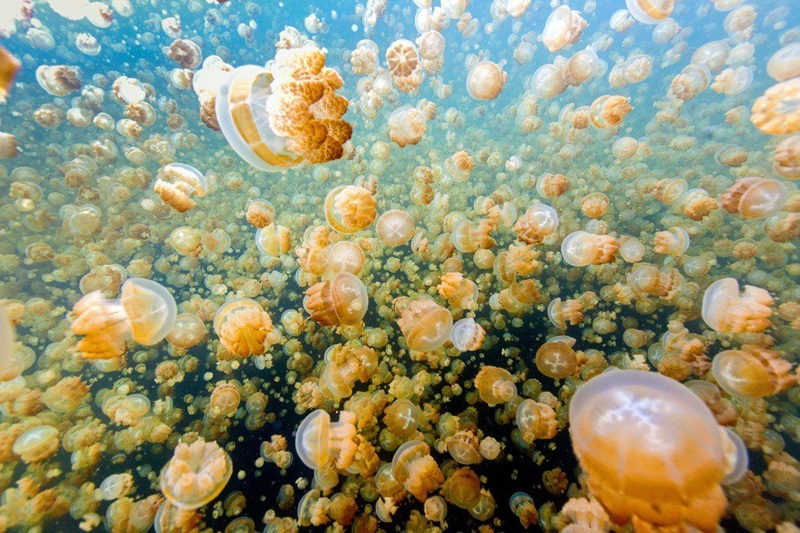
Why Do Thousands of Tourists Swim With Jellyfish at Palau’s Remote Island Lake?
Imagine floating in crystal clear water with thousands of golden jellyfish floating gently all around you without the fear of painful stings. It may sound like something out of a fantasy movie, but this incredible experience is real. Visitors from around the world flock to the Pacific island nation of Palau every year to take a dip in the world-famous Jellyfish Lake, one of the world’s most unique natural wonders. The lake is now a must see destination for adventure seekers, photographers and marine life enthusiasts. But what makes these jellyfish harmless and why has this isolated lake captured global attention? Here’s what you need to know.
What Is Jellyfish Lake in Palau?
Jellyfish Lake, known locally as Ongeim’l Tketau, is a remote marine lake on the island of Eil Malk, part of the country of Palau in the western Pacific Ocean. The lake was created thousands of years ago when the rising sea level trapped seawater in a limestone basin, forming an isolated ecosystem found nowhere else on earth. Today, the lake is populated by millions of golden jellyfish (Mastigias papua etpisoni) and moon jellyfish. In their evolution , these jellyfish have no natural predators. Their stinging cells have become so weak over time that they are generally considered harmless to humans. This rare evolutionary quirk means visitors can swim amongst them, an almost impossible experience to find elsewhere in the world.
Why Are Tourists So Eager to Swim With Jellyfish?
For many travelers, the opportunity to safely interact with jellyfish is a once in a lifetime opportunity. Palau’s lake jellyfish have adapted to their isolated environment, unlike ocean jellyfish which can deliver painful or even dangerous stings. Most visitors can come up close and personal without much fear of danger as their sting is not as potent.
The peaceful turquoise waters of the lake are surrounded by lush tropical forests and towering limestone cliffs, providing a stunning backdrop that attracts photographers and nature lovers alike. Social media has only added to the appeal, with endless videos of visitors drifting through clouds of sparkling golden jellyfish.
A Fragile Ecosystem That Needs Protection
Jellyfish Lake might seem like a tourist paradise but scientists caution it is an extremely fragile ecosystem. In recent years, the jellyfish population has dramatically decreased due to environmental changes such as warmer water temperatures associated with climate change. In one big decline the population almost disappeared and then came back slowly. Palau has adopted strict measures to protect the lake. Visitors can’t wear scuba gear, because the bubbles disturb sensitive layers of water. Chemical sunscreens are discouraged because they are harmful and tourism activities are carefully regulated. Responsible tourism is vital to protecting the lake for future generations, according to conservation experts.
Why This Natural Wonder Matters
Jellyfish Lake is not just a pretty travel destination. It is regarded by researchers as an important natural laboratory for the study of evolution, marine biology and how isolated ecosystems change over thousands of years. The jellyfish’s unusual evolutionary path provides important clues into how species evolve when their predators are removed. Economically, the lake also plays a significant role in Palau’s tourism industry. Visitors to Jellyfish Lake often take the opportunity to explore nearby reefs of coral, dive sites, and protected marine reserves, supporting local businesses and conservation efforts. But one of the biggest challenges for Palau continues to be balancing tourism with environmental protection, experts say.
Discover More Trending Stories You Shouldn’t Miss
What Caused Venezuela’s Deadly Earthquake?
Explore the latest updates on the Venezuela earthquake, rising death toll, rescue efforts, and the impact on affected communities.
Why Is OpenAI’s AI Speaker Unique?
Discover how OpenAI’s first screenless AI speaker could redefine smart homes with its innovative AI-powered features.
Why Visit Thailand Beyond Luxury Travel?
Check why experiential tourism is making Thailand the top travel destination for authentic adventures in 2026.
What Makes StepX Neo Revolutionary?
Explore the features of StepFun’s StepX Neo, the world’s first agentic AI smartphone, and what sets it apart.
Who Stole The Odyssey Premiere Spotlight?
Discover the standout fashion moments as Zendaya, Anne Hathaway, Tom Holland, and the cast dazzled on the red carpet.
What Visitors Should Know Before Going
Swimming in jellyfish lake involves a short hike through tropical forest to get to the water.
Visitors are asked to follow local regulations, avoid unnecessary contact with the jellyfish and respect conservation guidelines. The jellyfish are not dangerous, although those with sensitive skin can get mild irritation. Travelers should also be aware that access to the lake can sometimes be restricted due to environmental factors or conservation efforts.
FAQs
1. Why don’t the jellyfish of Palau sting people?
The golden jellyfish evolved in a predator-free environment , so their stinging cells were too weak to affect most humans .
2. Can you swim in Jellyfish Lake?
Yes. Swimming is generally safe but sensitive skin people may get some irritation.
3. What is the location of Jellyfish Lake?
Jellyfish Lake sits on the island of Eil Malk in the Pacific island nation of Palau, known for its protected marine habitats.
4. Why is Jellyfish Lake important?
It is a major tourist attraction and an important scientific site for the study of evolution, marine environments, and climate change.

