

Iran ties Hormuz reopening to US concessions on several demands
The future of the Strait of Hormuz has become the latest pressure point in the confrontation between Iran and the United States. Tehran says it is close to an agreement with Oman on new shipping arrangements through the strategic waterway, but the deal may not be enough to restore normal traffic.Iran has tied the full reopening of the strait to concessions from Washington, including an end to military pressure, the lifting of sanctions and the naval blockade, the release of frozen Iranian assets and compensation for damage caused by recent military action. The development is being closely watched by energy traders, shipping companies and oil-importing countries because any prolonged disruption could have consequences far beyond the Middle East.
Iran sets conditions for Hormuz reopening
Iranian Foreign Minister Abbas Araqchi has said negotiations with Oman are nearing completion. The proposed arrangement would establish new shipping routes through the Strait of Hormuz and could provide vessels with a clearer framework for navigating the waterway. However, Tehran has stressed that an agreement with Oman does not automatically mean the strait will be fully reopened. Iran says Washington must also address its broader demands before unrestricted shipping can resume. The two countries are communicating through intermediaries rather than holding direct negotiations, adding another layer of uncertainty to the process.
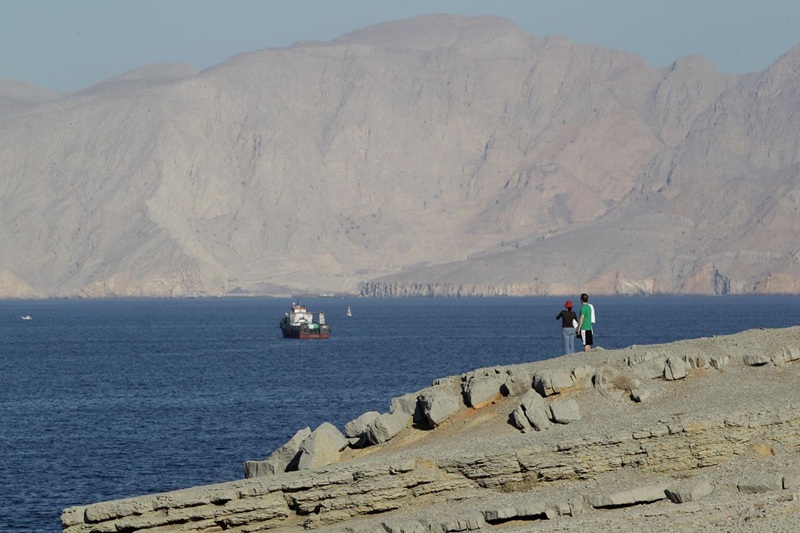
Description of the Strait of Hormuz
The Strait of Hormuz is a strategic passage connecting the Persian Gulf and the Gulf of Oman and the Arabian Sea. The reason behind the importance of this strait is due to the huge amount of energy which passes through it. According to the U.S. According to the Energy Information Administration, an estimated 20 million barrels of crude oil and petroleum were transported via the strait on a daily basis in 2024, which constitutes almost a fifth of the demand for the world’s petroleum liquids.
Role of Oman as Diplomat
Oman has been traditionally viewed as a diplomat between Iran and the United States of America. Its participation in the current ship negotiation shows the country’s traditional role.
Iran and Oman have reportedly reached an understanding over the coordinates of a proposed shipping route through Hormuz. But Iran’s Revolutionary Guard has said reopening the waterway does not depend solely on the Oman talks.That distinction is important for shipping companies. A temporary arrangement may help some vessels move, but commercial operators need confidence that the route will remain open and safe.
Oil markets remain on edge
The uncertainty has already affected oil trading. Reuters reported Brent crude at $84.39 a barrel and West Texas Intermediate at $78.77 on Monday, after prices had fallen the previous week on hopes of a faster reopening.The reaction shows how closely oil prices are tied to expectations surrounding Hormuz. If negotiations produce a credible and lasting reopening, some of the geopolitical risk premium could disappear. But if talks break down, traders could again price in the possibility of tighter supplies and higher transportation costs.
The meaning for consumers
The conflict might be far off, but the economic impact could affect their household. Higher crude prices can increase fuel, freight and airline costs while raising expenses for industries that depend heavily on energy. Asian economies are especially exposed because major energy importers, including China, India and South Korea, rely heavily on supplies moving through the Gulf. For now, the proposed Iran-Oman arrangement offers a possible route toward stabilizing shipping. But the larger political dispute remains unresolved.
More Stories You Shouldn’t Miss
Could Tom Holland’s Luxury Stay Surprise?
Discover the lavish details behind Tom Holland’s extravagant stay at Mumbai’s iconic Taj Mahal Palace.
What Makes India’s Brain Atlas Revolutionary?
Explore how Indian scientists are unlocking the mysteries of the human brain with cutting-edge 3D mapping.
Why Did US Seize Iranian Tanker?
Uncover the dramatic events behind the US Navy’s tanker seizure and its impact on India.
Why Reject Two Citizenship Offers?
Find out why Rashid Khan chose loyalty over offers from India and Australia.
How Did Vikram-1 Create History?
Check out how Skyroot’s Vikram-1 became a milestone for India’s private space ambitions.
What Lies Ahead for the Strait of Hormuz?
The immediate test is whether Iran and Oman can finalize their shipping arrangement and put it into operation. The bigger challenge will be whether Tehran and Washington can reach an understanding over the conditions Iran has attached to a full reopening. For Iran, the Strait of Hormuz is no longer simply a shipping issue. It has become leverage in a wider confrontation with the United States. Until that confrontation is eased, the Iran Strait of Hormuz reopening is likely to remain uncertain, leaving global energy markets watching every diplomatic move closely.
FAQs
Why is Iran adamant on not reopening the Strait of Hormuz?
There are several demands by Iran which should be fulfilled before the re-opening of the strait, among them are removal of sanctions and blockade, military threats, frozen assets and compensations.
What is the agreement regarding the Hormuz between Iran and Oman?
Iran and Oman are discussing the transit passage in the Strait of Hormuz. Iran claims that the above agreement is not enough for the strait to be reopened.
Why is the Strait of Hormuz important for the transport of oil?
The Strait of Hormuz is a crucial part of the transportation of oil because much of the world’s oil and petroleum goes through this strait.
Will the events impact the oil price?
Yes. The uncertainties that exist will create fears about disruptions of oil supply, hence increase in prices.

