

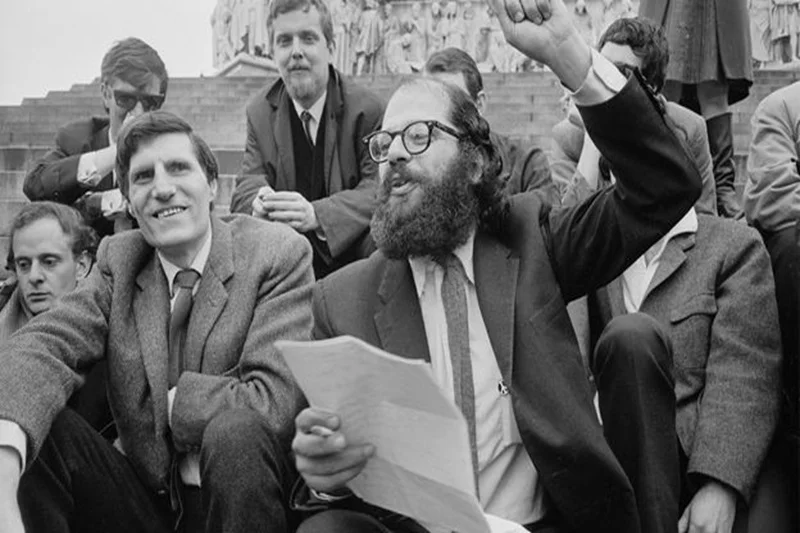
How the 1957 ‘Howl’ Obscenity Trial Changed Free Speech in America Forever
In the fall of 1957, a San Francisco courtroom became the unlikely battleground for a fight over poetry. At the center of it all was a raw, sprawling piece of verse called “Howl,” written by a young poet named Allen Ginsberg. Its subject matter drug use, sex, mental breakdowns, poverty, disillusionment was the kind of thing polite 1950s America preferred not to discuss out loud, let alone see printed in a book. So when city authorities tried to shut it down, what started as a local obscenity case turned into something much larger: a debate over who gets to decide what people are allowed to read.
How It All Started
Ginsberg first read “Howl” aloud at a gallery event in San Francisco back in 1955, and the reaction was electric. A year later, poet and bookstore owner Lawrence Ferlinghetti published it through his own City Lights Books as part of the collection Howl and Other Poems. The book’s blunt language and open treatment of taboo subjects made it stand out immediately; the Library of Congress would later call it a landmark work that helped define the Beat Generation. But that same boldness got it into trouble. In 1957, U.S. Customs agents seized a shipment of imported copies before they ever reached bookstore shelves. Then San Francisco police arrested Shigeyoshi Murao, the City Lights store manager, for selling a copy to an undercover officer. Ferlinghetti himself was charged with publishing and selling obscene material. The American Civil Liberties Union stepped in to help with his defense, and almost overnight, a small-town obscenity case became a national free-speech story.
What Happened in the Courtroom
The case landed before Judge Clayton W. Horn. Instead of simply asking whether the poem’s language was shocking, the defense took a different approach entirely; they brought in literary scholars and critics to argue that the poem had genuine artistic merit, and that its shock value was part of the point. Prosecutors countered that the explicit content crossed a legal line, full stop. But the defense held firm: a serious work of literature shouldn’t lose its protection just because it makes some readers uncomfortable.
On October 3, 1957, Judge Horn sided with Ferlinghetti. His ruling turned on a phrase that would echo through American law for decades: the poem, he said, carried “redeeming social importance,” and that was enough to keep it out of obscenity territory. Offensive language on its own, he decided, wasn’t grounds to silence serious writing.
Why This Case Still Matters
It’s hard to overstate how far this ruling’s influence traveled. It gave real legal weight to the idea that literature could tackle uncomfortable, even ugly, subject matter without automatically being labeled illegal. That shift rippled through the publishing world, clearing a path for books that had previously been too risky to print. People often point to D.H. Lawrence’s Lady Chatterley’s Lover and Henry Miller’s Tropic of Cancer as later beneficiaries of the precedent “Howl” helped set.
After the trial, courts increasingly had to weigh a work’s overall artistic and social value, not just whether it contained a shocking word or scene. It wasn’t an instant fix, obscenity law kept evolving for years afterward, through plenty more court battles. But this was one of the moments that pushed things forward.
More Stories Worth Exploring
What Happened In Blake Lively’s Case?
Check out the latest legal developments surrounding the dispute.
How Did Hayden Panettiere’s Family React?
Find the emotional response following the tragic news.
Why Are Fertiliser Prices Hitting Farmers?
Uncover France’s emergency support for struggling farmers.
What Secrets Does Shiva Reveal?
Dive into the spiritual teachings behind Lord Shiva.
Why Is Cartagena Trending This Year?
See why its colonial quarter attracts global travellers.
The Irony of Trying to Ban It
There’s a funny twist to the whole story: the attempt to suppress “Howl” ended up doing the opposite of what the prosecution wanted. The trial’s publicity turned Ginsberg from a relatively obscure underground poet into one of the most recognized literary voices of his generation, and it put City Lights Books on the map for good.
These days, the language in “Howl” probably wouldn’t raise many eyebrows. But the question of the trial forced into the open hasn’t gone anywhere: should the government be able to restrict expression just because it’s uncomfortable or unpopular? Judge Horn’s decision didn’t settle that question once and for all nothing really does but it remains one of the defining moments in the ongoing argument over what free speech actually protects.
FAQ
What was it?
A 1957 obscenity case in San Francisco over Lawrence Ferlinghetti’s publication of Allen Ginsberg’s Howl and Other Poems.
Who wrote the poem?
Allen Ginsberg, one of the central figures of the Beat Generation.
Who defended Ferlinghetti?
The ACLU, with attorney Albert Bendich playing a key role.
How did it end?
Judge Clayton W. Horn ruled the poem wasn’t obscene, citing its “redeeming social importance.”
Why does it matter now?
It helped establish that controversial literature deserves legal protection, shaping how courts have approached censorship ever since.

