

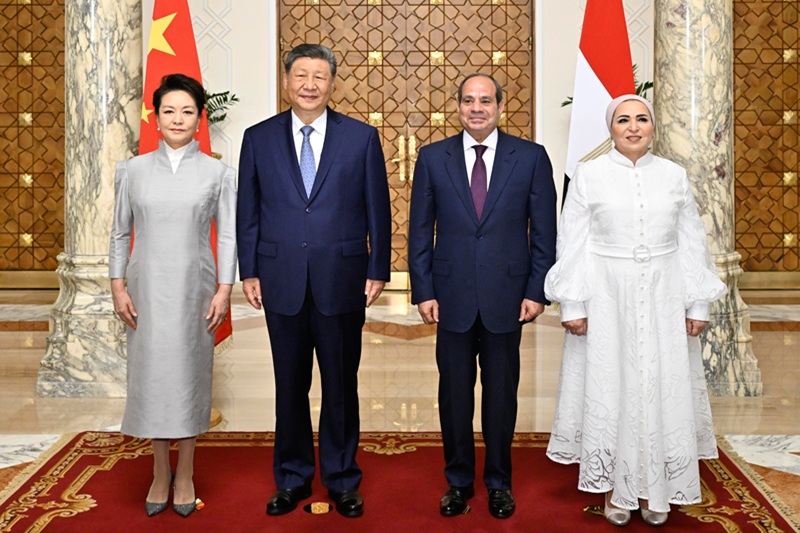
China and Egypt Strengthen Strategic Partnership as Xi Jinping Meets President Sisi
When Xi Jinping touched down in Cairo on September 1st, it wasn’t just another diplomatic stop. The visit landed on a milestone 70 years since China and Egypt first established formal ties back in 1956, when Egypt became the first country in Africa or the Arab world to recognize the People’s Republic of China. Seven decades later, the two leaders sat down at Al-Ittihadiya Palace with a clear goal: push a relationship that’s already substantial into something even bigger.
What Actually Happened in the Room
Xi and Egyptian President Abdel Fattah El-Sisi covered a lot of ground bilateral cooperation, sure, but also the messier regional and international issues neither country can ignore. Several agreements and memorandums came out of the meeting, a sign that this wasn’t just ceremonial handshaking. Sisi, for his part, kept coming back to two priorities: industrial localization and technology transfer. In plain terms, Egypt doesn’t just want Chinese money, it wants the know-how that comes with it. This isn’t a new relationship finding its footing, either. Back in 2014, China and Egypt upgraded their ties to a “comprehensive strategic partnership,” a label that opened the door to deeper cooperation across trade, infrastructure, development, and politics. This latest meeting was really about testing how much further that framework can stretch.
Why China Keeps Showing Up in Cairo
Geography does a lot of the explaining here. Egypt sits at a crossroads linking Africa, the Middle East, and the Mediterranean, with the Suez Canal running straight through it as one of the world’s busiest shipping arteries. For Beijing, that’s not a minor detail. It makes Egypt valuable as both a market to sell into and a logistical hub to build around. Chinese money has already found its way into Egyptian manufacturing, infrastructure, and green energy projects. But Cairo isn’t putting all its eggs in one basket. Egypt has been deliberately balancing relationships with China, Russia, and Europe simultaneously, according to Reuters, a hedging strategy that lets it avoid becoming too dependent on any single power.
The Question That Actually Matters to Egyptians
Strip away the diplomatic language, and there’s one question that matters most on the ground in Cairo: will any of this actually create jobs?
That’s the real test for the economic side of this partnership. If Chinese cooperation in manufacturing and technology helps Egypt build up its own domestic production rather than just importing more finished goods it could meaningfully shift the country’s economic trajectory. China, meanwhile, gets something valuable too: a foothold in a country with outsized influence across both Africa and the Arab world. Both governments have leaned into framing this as an example of “South-South cooperation” , Beijing’s preferred term for developing nations working together rather than through Western-dominated channels.
There’s a Bigger Picture Here Too
The timing of the visit wasn’t an accident. The Middle East is dealing with real security instability right now, and the broader competition between major global powers is reshaping alliances across the region. Xi has been pushing a consistent message lately that developing countries deserve a bigger seat at the table, and that Middle Eastern security should be handled more by the countries actually in the region. There’s also a military dimension quietly developing alongside the economic one. Egypt recently hosted joint air exercises pairing Chinese J-16 fighters with French-made Rafales, a small but telling detail about how far this relationship now extends beyond trade deals.
What’s Making Headlines You Can’t Miss?
Could Hoekstra Face Expulsion From Canada?
Check out why thousands of Canadians are demanding action against the US ambassador.
Who Is Martina Strong, Really?
Uncover the diplomat’s UAE appointment and the political delays surrounding her confirmation.
Why Did Clancy’s Jury Deadlock?
Find out what led to the mistrial and why the jury couldn’t reach a verdict.
Why Is Lake Ontario Renamed?
Browse what Apple Maps’ surprising “Lake America” change means and why it happened.
Which Haunted Hotels Should You Visit?
Experience five spooky American hotels known for paranormal encounters and eerie stays.
What Happens From Here
The real test isn’t the handshakes or the signed memorandums, it’s whether any of it turns into results. If the investment and technology transfers actually materialize into new factories and jobs, Egypt stands to gain real manufacturing capacity. China, in turn, cements its position in a region it clearly sees as strategically indispensable. Marking 70 years of diplomatic relations could have been a purely symbolic occasion. Instead, the Xi-Sisi meeting suggests both sides are treating it as a launching point betting that the next chapter of this partnership matters more to their long-term ambitions than anything that came before it.
FAQs
1. Why did Xi Jinping visit Egypt in 2026?
Xi visited Egypt to strengthen bilateral relations, expand economic and strategic cooperation and discuss regional and international issues with President Abdel Fattah El-Sisi.
2. How long have China and Egypt had diplomatic relations?
China and Egypt established diplomatic relations in 1956. The two countries marked the 70th anniversary of those relations in 2026.
3. What is the China-Egypt strategic partnership?
It is a broad framework for cooperation covering political relations, economic development, trade, infrastructure, technology and international coordination. The relationship was elevated to a comprehensive strategic partnership in 2014.

