

Asteroid Hit North Sea: How a 330-Foot Tsunami Rocked Ancient Europe
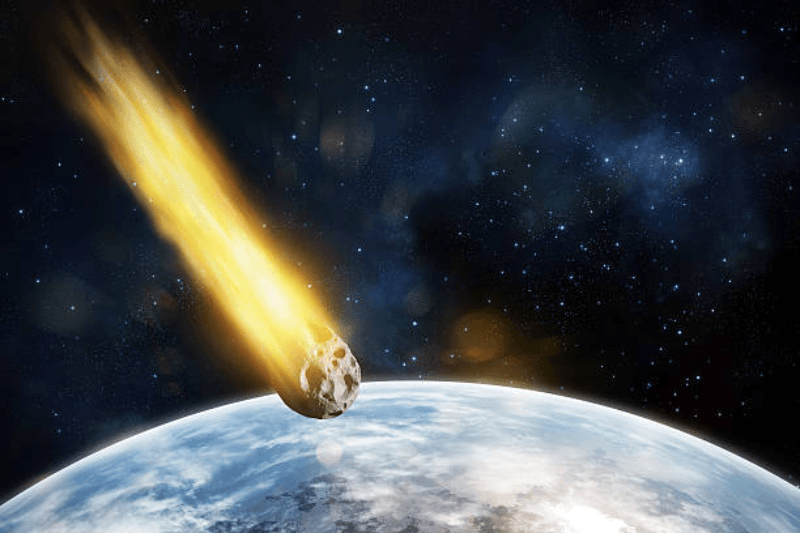
A massive asteroid struck the North Sea 43 to 46 million years ago. It caused a tsunami that was taller than today’s skyscrapers. This terrible event, confirmed by scientists, changed ancient Europe’s coastline in just minutes.
The Catastrophic Strike
Picture a football-field-sized space rock, about 160 meters wide, hurtling from the west at a shallow angle into the North Sea seabed. The impact carved out the Silverpit Crater, a 3-kilometer-wide scar hidden beneath layers of sediment. Seismic imaging revealed its dome and ring faults. Shocked quartz and feldspar crystals at the crater floor showed the extreme pressures that only an asteroid could produce.
Dr. Uisdean Nicholson of Heriot-Watt University led the research, combining computer models with rock analysis. “It created a 1.5-kilometer-high curtain of rock and water that collapsed, birthing a mega-tsunami over 100 meters (330 feet) tall,” he explained.
Tsunami’s Devastating Reach
This prehistoric wave was much larger than Big Ben. It raced across the North Sea and crashed into proto-European shores. Ancient forests and early life faced destruction as water pushed inland, reaching much farther than today’s storm surges. This event took place while continents were still drifting, which added to the chaos in the region. Modeling indicates that the collapse of the plume created waves that changed seabeds and spread debris widely. No dinosaurs were affected, as this happened long before their time, but it shows the violent history of Earth.
Why It Matters Today
Silverpit joins top craters like Chicxulub and highlights the need for better asteroid monitoring. Modern technology, such as NASA’s DART, provides hope for defense against these threats. This discovery changes our understanding of impact history and reminds us that cosmic dangers are always present.
FAQs
1. When did the North Sea asteroid hit?
Around 43-46 million years ago, in the Eocene epoch.
2. How tall was the tsunami?
Over 100 meters (330 feet), triggered by a collapsing 1.5km water-rock plume.
3. What evidence confirms the impact?
Shocked quartz/feldspar crystals, seismic imaging of 3km crater, and impact modeling.
Summary:
Scientists confirm a 160m asteroid struck the North Sea, forming Silverpit Crater & 330-ft tsunami. Shocked minerals, seismic data prove ancient mega-wave rocked Europe.


