

Artemis 3 Mission Update: NASA Swaps Moon Landing for Earth Orbit Test
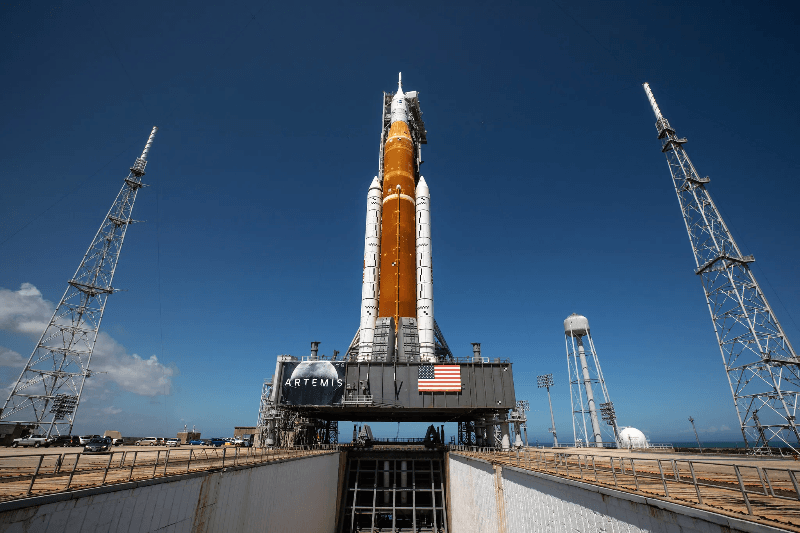
In a recent overhaul of its Artemis program, NASA moved Artemis 3 from a historic Moon landing to a demonstration in low Earth orbit (LEO). Lunar boots will not be available until Artemis 4 due to this change, which puts safety and testing first.
Why the Mission Change Happened
In February 2026, Jared Isaacman, the new NASA Administrator, announced the shift to gradually develop capabilities, similar to Apollo 9’s 1969 lunar module test in Earth orbit. Artemis 3 tests docking with SpaceX Starship HLS and Blue Origin Blue Moon in low-Earth orbit (LEO) rather than taking a chance on a direct lunar landing following Artemis 2’s lunar flyby. This lowers the risks associated with lander readiness, Orion heat shield problems, and Starship delays.
New Artemis 3 Mission Profile
Midway through 2027, Artemis 3 will launch on an SLS rocket carrying the Orion crew capsule. In low Earth orbit, the crew will meet and dock with one or both commercial landers, potentially conducting a spacesuit spacewalk test. No lunar expedition; instead, the emphasis is on demonstrating integrated operations prior to Moon attempts. By standardizing the fleet and doing away with Boeing’s complicated upper stage, NASA is aiming for yearly SLS launches.
Shift to Artemis 4 for Moon Landing
Artemis 4, which is scheduled for 2028 along with a second attempt, will be the first lunar landing of the Artemis era. For dependability, this divides the initial Artemis 3 objectives among missions. Isaacman’s strategy advances SpaceX and Blue Origin technology safely while increasing launch cadence.
Benefits of the Revised Roadmap
By avoiding Apollo-style leaps, safer progression enables NASA to address problems gradually. It tests suits and landers closer to home and expedites lunar returns with dual 2028 landings. Aiming for annual flights, standardization reduces SLS expenses.
Impact on SpaceX and Blue Origin
Despite previous delays, SpaceX’s Starship HLS receives an important crewed docking demonstration. In order to test both providers, Blue Moon from Blue Origin joins for redundancy. Backup plans for upcoming landings are guaranteed by this competition.
Artemis Timeline Overview
| Mission | Launch Target | Key Objectives | Status |
| Artemis 2 | Late 2026 (delayed) | Crewed lunar flyby | Prep amid helium issues |
| Artemis 3 | Mid-2027 | LEO docking, lander test, spacewalk | Revised profile |
| Artemis 4 | 2028 | First crewed Moon landing | Primary landing mission |
| Artemis 4+ | 2028 | Second landing attempt | Backup/redundancy |
FAQs
1. Why did NASA cancel Artemis 3’s Moon landing?
To prioritize safety by testing landers in LEO first, mirroring Apollo 9, amid delays in Starship and Orion tech.
2. When will humans land on the Moon again?
NASA targets Artemis 4 in 2028 for the first landing, with a second shot the same year.
3. What will Artemis 3 do in Earth orbit?
Dock Orion with Starship HLS and/or Blue Moon, test spacesuits via spacewalk—no lunar travel.
4. Who announced the Artemis changes?
NASA Administrator Jared Isaacman in a February 2026 press conference.
5. Does this delay the whole Artemis program?
No—it’s an acceleration: annual launches, LEO test in 2027, landings in 2028.
Summary:
Artemis 3 no longer lands on Moon now LEO test with Starship/Blue Moon docking in 2027. New NASA chief Jared Isaacman aims for annual launches, two 2028 landings. Builds safer path post-Artemis 2.


