

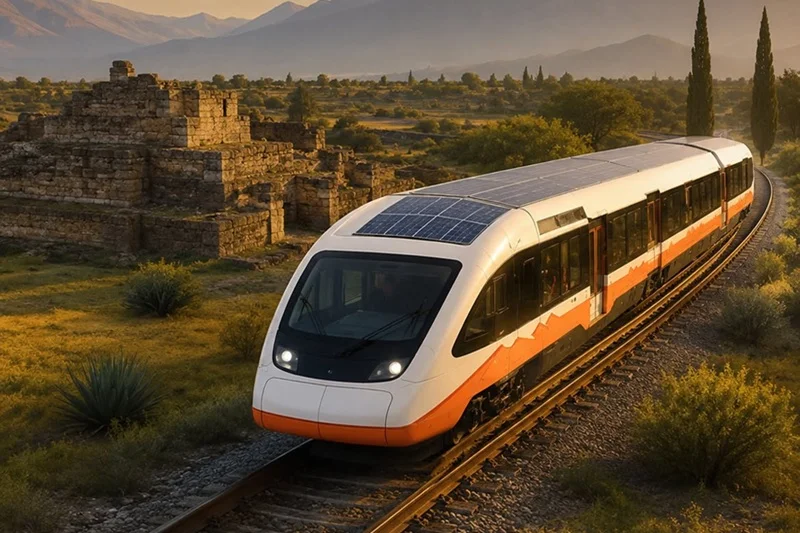
Argentina’s First Solar Train: How to Ride Through 10,000 Years of Indigenous History
Imagine yourself traveling over high mountains, through vibrant valleys and old villages, not on a diesel locomotive, but on a silent, solar-powered train. This is what visitors can now experience in northwestern Argentina, where the country’s first solar train offers more than just breathtaking scenery. It also takes passengers on an incredible journey through more than 10,000 years of Indigenous history. Argentina’s first solar train, located in the UNESCO-listed Quebrada de Humahuaca valley in the northern province of Jujuy, has quickly become one of South America’s more unusual tourism offerings. As travelers look for more sustainable adventures that enhance their sense of history, the railway’s mix of renewable energy and cultural preservation is garnering global attention.
What Is Argentina’s First Solar Train?
The first solar-powered tourist train in Argentina runs in the scenic landscapes of Jujuy, close to the Andes Mountains. This train is powered by lithium-ion batteries, which are mostly charged by locally produced solar power, rather than fossil fuels, as is the case with traditional railways. The project is an example of the increasing investment in sustainable transportation in Argentina as well as a reflection of one of its most abundant cultural landscapes. The route links a string of historic villages where Indigenous communities have lived for thousands of years. Travellers can experience panoramic mountain views and learn about ancient civilizations that lived in the region long before European settlement.
A Journey Through 10,000 Years of Indigenous History
The train travels through the Quebrada de Humahuaca, a valley recognized as a World Heritage Site by UNESCO for its tremendous cultural and archaeological importance. Archaeological finds show that humans have inhabited the valley for over 10,000 years. Long before the Inca Empire expanded into the region, indigenous groups such as the Omaguaca, Atacama and other Andean communities developed farming, trade routes and unique cultural traditions. Today many local communities still preserve their languages, music, crafts and traditional festivals and visitors can see a living culture rather than just historical sites. There are stops along the way in charming villages with colorful colonial churches, artisan markets and museums that tell the stories of the area’s Indigenous heritage.
Why the Solar Train Matters
Argentina’s First Solar Train launch is more than just another tourist attraction. The railway is powered by renewable energy, so emissions are significantly lower than those of conventional diesel trains. This is in line with global efforts to promote more environmentally responsible tourism and to protect vulnerable mountain ecosystems. And its economic effect is just as important. Tourism creates new opportunities for local businesses, artisans, restaurants and family-run accommodations in communities that have often relied on seasonal visitors. Jujuy officials hope the railroad will spread tourism income around several towns, rather than concentrating visitors in one place, and encourage longer visits.
A New Model for Sustainable Tourism
Global travelers are becoming more aware of their environmental footprint. Therefore, destination brands that offer sustainability alongside authentic cultural experiences are becoming popular. Argentina’s solar train is a perfect fit to this trend. Instead of merely moving passengers from point A to point B, it turns the trip itself into a learning opportunity about Indigenous heritage, renewable energy and conservation. According to travel experts, projects like this could inspire similar ones across Latin America, where historic landscapes are increasingly under pressure from mass tourism.
Discover More Trending Stories You Shouldn’t Miss
What Caused Venezuela’s Deadly Earthquake?
Explore the latest updates on the Venezuela earthquake, rising death toll, rescue efforts, and the impact on affected communities.
Why Is OpenAI’s AI Speaker Unique?
Discover how OpenAI’s first screenless AI speaker could redefine smart homes with its innovative AI-powered features.
Why Visit Thailand Beyond Luxury Travel?
Check why experiential tourism is making Thailand the top travel destination for authentic adventures in 2026.
What Makes StepX Neo Revolutionary?
Explore the features of StepFun’s StepX Neo, the world’s first agentic AI smartphone, and what sets it apart.
Who Stole The Odyssey Premiere Spotlight?
Discover the standout fashion moments as Zendaya, Anne Hathaway, Tom Holland, and the cast dazzled on the red carpet.
Planning Your Ride
In Jujuy Province there is a solar train that connects some towns. Many travelers start their trip near Volcán and continue to Tilcara, Purmamarca and other nearby attractions. Not only day trippers, but visitors are encouraged to spend a few days in the area. Local museums, archaeological sites, traditional markets and hiking trails offer a deeper insight into the Andean culture. The best times to visit are usually from April to November, when the weather is pleasant and skies are mostly clear.
FAQs
1. Where is Argentina’s First Solar Train?
It winds through the north-western Argentine province of Jujuy, crossing the Unesco-listed Quebrada de Humahuaca valley.
2. Why is the train considered to be eco-friendly?
The train operates on lithium-ion batteries predominantly charged by solar, minimizing reliance on fossil fuel.
3. What Indigenous history is there to learn about?
Passengers will explore a land inhabited for over 10,000 years by Indigenous communities including the Omaguaca and other Andean cultures.

