

The $6 Million Banana: How a Piece of Fruit Taped to a Wall Became the Art World’s Weirdest Investment
Picture this: you walk into a gallery, and there, taped to the wall with a strip of ordinary gray duct tape, is a banana. Just a banana. Nothing else. Now picture someone handing over $6.2 million for it. That’s not a thought experiment, it actually happened. The piece is called Comedian, it’s the work of Italian artist Maurizio Cattelan, and it’s spent the last several years quietly (and not so quietly) making people furious, delighted, and confused in roughly equal measure.
So what actually IS this thing?
Strip away the hype and Comedian is exactly what it looks like: a banana, some tape, a wall. But that’s kind of the point. Cattelan works in conceptual art, where the idea matters more than the object sitting in front of you and here, the banana is a blunt little instrument for poking at a much bigger question: how does the art world decide what something is worth? Here’s the part that trips people up: the banana itself isn’t precious. It’s fruit, it rots, it gets eaten, it gets swapped out. What you’re actually buying isn’t the banana at all, it’s a certificate and a set of instructions telling you how to install one. So no, nobody’s preserving a decomposing banana in a climate-controlled vault somewhere. That was never the plan.
How does a banana even become famous?
Rewind to Art Basel Miami Beach, 2019. The Perrotin gallery put Comedian on display, and it detonated online almost instantly. Crowds gathered, phones came out, and the debate kicked off immediately: is this genius, is this a prank, or is it both? Somewhere in the middle of all that, three separate buyers actually paid real money for it between $120,000 and $150,000 apiece which tells you the joke, if it was one, was already worth something. Then things got even stranger. Another artist walked up, peeled the banana off the wall, and ate it. Right there in the gallery. The banana got replaced within the hour, and honestly, that moment did more to prove Cattelan’s point than any museum wall text could have the fruit was never the artwork. It was always disposable.
The auction that changed everything
Fast forward to November 2024. Comedian lands at Sotheby’s in New York, carrying a pre-sale estimate of $1 to $1.5 million already a wild number for produce. Then the bidding starts, and it just… doesn’t stop. Seven minutes later, the hammer comes down at $6.2 million, fees included.
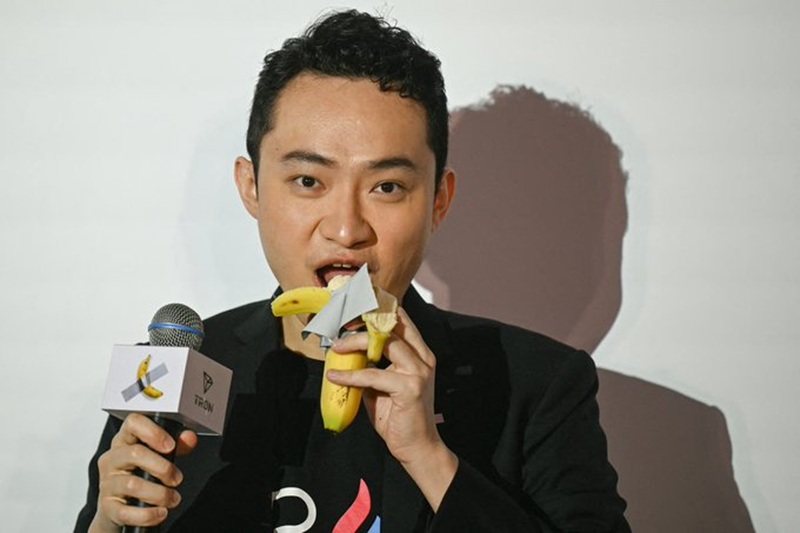
The winning bidder was Justin Sun, the cryptocurrency entrepreneur behind TRON and he paid in crypto, which Sotheby’s flagged as a genuinely unusual way to close out a sale like this. True to the artwork’s own history, Sun said he planned to eat the banana too, following in the footsteps of the guy who’d done exactly that back in 2019.
Okay, but what’s it actually about?
This is where the joke turns into something worth sitting with for a second. Cattelan has framed the piece as a provocation, plain and simple: why does a banana cost pocket change in a grocery store, but the same banana once it’s been declared “art” can command millions? The honest answer is messy. It’s part concept, part reputation (Cattelan is a known provocateur with a track record of stunts like this), part paperwork (that certificate is doing a lot of work), and part sheer spectacle. Sotheby’s itself has leaned into that framing, describing the piece as a pointed look at how value gets assigned and by whom in the art market.
Five stories worth reading for the bigger picture.
Who Are China’s College Basketball Mavericks?
Check out how Chinese players are challenging the usual path in U.S. college basketball.
Why Does Singapore Want Longer Visits?
Find out why Singapore is targeting longer stays and repeat travel from Indian visitors.
Why Was Power of Siberia 2 Renamed?
Uncover the reasons behind Putin’s pipeline renaming and its importance for Russia-China energy ties.
Could E1 Settlement Plan Endanger Peace?
Dive into why Israel’s E1 settlement project is drawing concern over the future of a two-state solution.
Why Did Apple Rename Lake Ontario?
See what the Lake America name change means and why Apple Maps made the update.
Why does any of this matter?
Because Comedian is really a story about attention economics dressed up as a banana. It went viral because people argued about it online, and that argument, that free, chaotic, worldwide argument is exactly what turned a piece of fruit and some tape into a multimillion-dollar object. The internet did the marketing. The auction just cashed the check. It’s also a pretty tidy snapshot of where contemporary art is right now: tangled up with celebrity, viral culture, and in this case cryptocurrency wealth. Love it, hate it, or roll your eyes at it, Cattelan got millions of people to stop scrolling for a second and actually ask: what makes something art, and who gets to decide what it’s worth?
FAQs
1. Who created the $6 million banana?
Italian artist Maurizio Cattelan created Comedian in 2019.
2. How much did the banana artwork sell for?
It sold for $6.2 million at Sotheby’s in New York in November 2024, including the buyer’s premium.
3. Who bought the $6 million banana?
Cryptocurrency entrepreneur Justin Sun won the auction.
4. Is the original banana preserved?
No. The fruit is replaceable. The conceptual artwork is defined through its associated documentation and installation instructions.
5. Why is the banana considered art?
It is a form of conceptual art designed to provoke questions about artistic value, authorship, consumer culture and the economics of the art market.

