

Why Your Smartwatch Can Make You Feel Tired Even After a Good Night’s Sleep
Last updated on July 14th, 2026 at 10:17 am
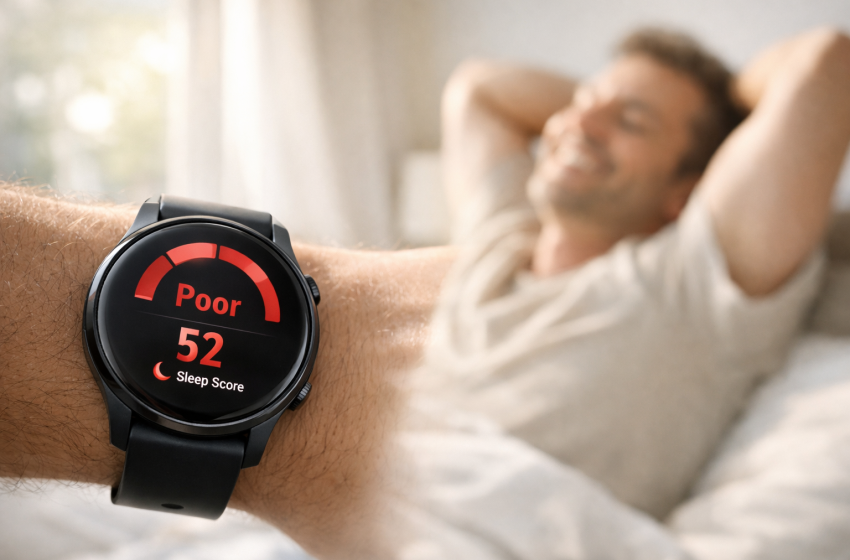
You wake up rested after what seemed like a good night’s sleep . You wake up, make your morning coffee, and peek at your smartwatch, only to be met with a disappointing message: “Low Recovery,” “High Stress,” or a bad sleep score. Almost at once, your confidence is gone. You start to wonder if you are tired, considering that you felt perfectly fine just moments ago. If this sounds familiar, you are not alone. Millions of people now use smartwatches and fitness trackers to track their sleep, but experts say these devices don’t always tell the full story. Sometimes the numbers on your wrist affect your feeling more than your body does.
Why your smartwatch and your body don’t always agree
Modern wearables combine movement, heart rate, heart-rate variability (HRV), breathing patterns and other physiological signals to estimate sleep quality. These technologies have come a long way over the years but they’re still making educated guesses, not directly measuring what’s going on in the brain. Unlike clinical sleep studies that directly measure brain activity by electroencephalography (EEG), consumer smartwatches depend on algorithms that interpret indirect signals. They can therefore easily misunderstand what is happening during the night. A heavy dinner, a glass of wine, an intense workout late in the evening, or even a mild feeling of anxiety before bed, can all temporarily boost your heart rate. Even if you slept well and woke up feeling refreshed, your watch may still interpret these changes as stress or poor recovery. Multiple studies have shown that many wearables do a decent job of measuring total sleep duration, but the numbers behind stress, recovery, fatigue and emotional readiness are much less reliable, and don’t always correlate with how users feel.
When sleep tracking starts creating stress
Health professionals have even given a name to this growing phenomenon: orthosomnia. Orthosomnia is an unhealthy fixation on getting “perfect” sleep, as quantified by data from wearables. People stop noticing the natural signs of a restful sleep, and start chasing the higher sleep scores. Ironically, that pressure can make it harder to sleep. There are many users who lie awake wondering if they are going to get an acceptable recovery score. Some wake up feeling good, until they check their smartwatch and are suddenly tired because it tells them they should be. Psychologists call this a nocebo effect the opposite of a placebo. The expectation of feeling worse can affect how people perceive their energy, mood, and physical wellbeing simply because they expect to feel worse.
Why smartwatch recovery scores can be misleading
Recovery scores aren’t necessarily wrong; they just don’t have context. Wearable devices can’t tell if your elevated heart rate was from healthy exercise, emotional excitement, digestion after a late meal, or bad sleep. They only sense changes in your physiological signals. For example, alcohol often increases heart rate during the night and decreases heart-rate variability. Even if you never woke up during the night, a smartwatch could take those changes as poor recovery. Likewise, a hard evening workout may temporarily increase cardiovascular activity, decreasing your recovery score while also contributing to long-term fitness gains. These limitations are why the wearable data should be viewed as a piece of a larger picture, rather than a definitive measure of health.
Why this matters beyond personal health
Wearable technology has taken off so quickly that it has made sleep something that can be measured and, for many people, competed over. Instead of “Am I rested?” users are increasingly asking “What was my sleep score? Experts fear this change could make people trust algorithms more than their own physical sensations. It can also create needless anxiety, undermine trust in normal signals from the body, and even discourage healthy sleep behavior. The implications are not only for individual users. Medical experts warn against using data from consumer wearables alone to gauge fatigue or sleep-related conditions, as device makers aim to improve the accuracy and understanding of recovery metrics.
How to use your smartwatch without letting it control your mood
If your wearable frequently reports that you’re tired when you feel fine, a few simple changes can help you regain perspective:
- Give overnight tracking a bit of a rest. Try a few nights without your smartwatch and see how you feel at the natural start to the day.
- Reduced factors influencing nighttime heart rate. Avoid heavy meals, alcohol and vigorous exercise a few hours before bedtime when possible.
- Remember, sleep scores are long-term trends, not daily verdicts. One low recovery score never tells the whole story.
- Listen to your body first. Don’t let one number fool you, if you feel refreshed every time you wake up.
- If the symptoms continue, consult a doctor. If you’re always tired and you’re getting enough sleep, you should probably see a professional about it instead of relying on your wearable.
Smartwatches are helpful but not the final authority
The fact is, wearables have made tracking sleep more accessible than ever before. They can reveal useful long-term trends, promote better habits and help people become more aware of their patterns. But they’re still consumer wellness tools, not medical diagnostic devices. For conditions such as sleep apnea, chronic insomnia, or other sleep disorders, clinical sleep studies are the gold standard. So unless the wearable tech gets a lot more sophisticated, the biggest benefit is seeing trends over weeks and months, not deciding if you had a “good” night based on a single score.
Frequently Asked Questions
Can a Smart Watch Detect Sleep Disorders?
No. Consumer smartwatches estimate sleep patterns using algorithms and sensors, but they cannot diagnose conditions such as sleep apnea or insomnia. A clinical sleep study is needed for accurate diagnosis.
Why does alcohol affect my smartwatch recovery score?
Alcohol affects heart rate, heart-rate variability and regular sleep cycles. Wearables often interpret these physiological changes as more stress or less recovery.
Should I stop sleeping with my smart watch?
Not necessarily. If sleep scores are creating stress or if they often don’t align with your subjective experience, take a few nights off from wearing the watch and see how your energy levels feel.

