U.S.-UAE AI Cooperation Could Reshape Ukraine Peace Strategy Beyond Sanctions and Weapons
The war between Ukraine and Russia has reached a stage of strategic fatigue. Sanctions have pressured economies, and weapons shipments have extended the dynamics on the battlefield. The usual Western approaches, like economic punishment and military reinforcement, have not achieved lasting peace. A new strategic direction is emerging: AI-enabled diplomacy.
The Binary Toolkit Problem: Sanctions vs. Weapons
The West’s policy framework has mostly been binary:
- Sanctions to weaken Moscow
- Military aid to strengthen Kyiv
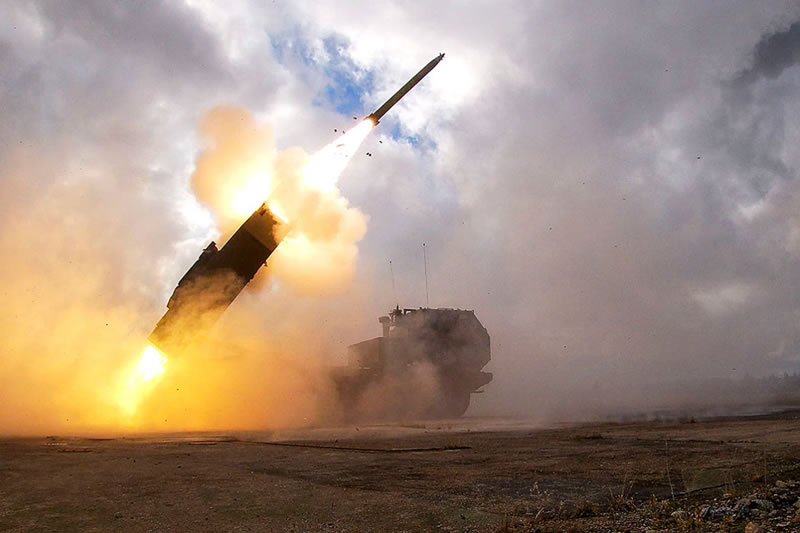
Both tools affect the war’s course, but neither directly creates peace. Sanctions put pressure on economies but seldom lead to quick political agreements. Military aid can help in battles but may also harden positions. The result is conflict management rather than conflict resolution. This is where AI diplomacy brings in a third option: strategic intelligence instead of strategic exhaustion.
AI as Structured Information Dominance
Artificial Intelligence changes how governments handle conflict data. Instead of just reacting to events, policymakers can now:
- Review real-time battlefield reports
- Detecting signs of economic stress
- Tracking troop movements using satellite feeds
- Monitoring cyber activity and digital propaganda
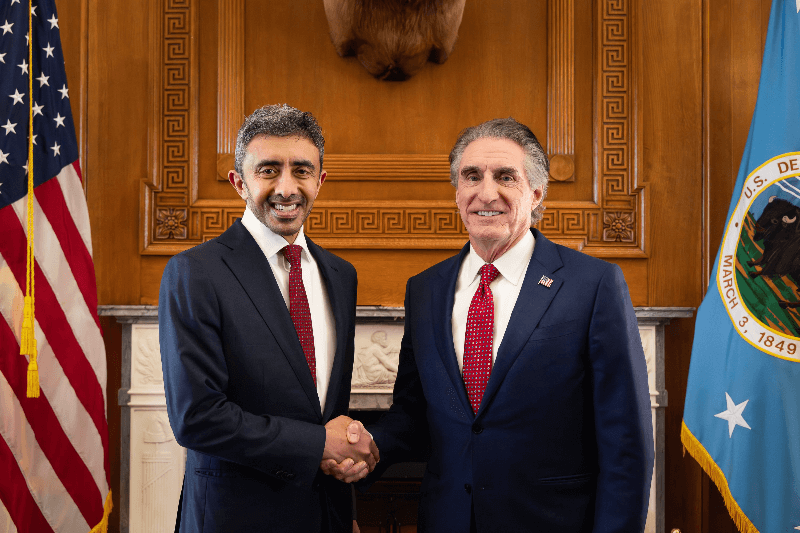
A partnership between the United States and the United Arab Emirates combines technological leadership with flexible regional diplomacy. AI does not replace diplomats; it makes them stronger. It turns scattered data into clear strategies.
Data-Driven Ceasefire Modeling
Imagine testing dozens of ceasefire scenarios before leaders step into a negotiation room.
AI models can simulate:
- Territorial compromise frameworks
- Humanitarian corridor viability
- Energy infrastructure stability
- Troop redeployment logistics
This predictive modeling helps negotiators find paths with a high chance of success, reducing guesswork and political risk. Peace becomes engineered, not improvised.
Monitoring Compliance Through Satellite and OSINT
Satellite imagery and Open-Source Intelligence (OSINT) powered by AI can monitor troop withdrawals, infrastructure damage, and ceasefire violations in near real time. Automated verification cuts down on misinformation and fosters trust, which are two key parts of any peace process.
Forecasting Negotiation Windows and Reducing Escalation
AI systems can detect patterns that suggest diplomatic opportunities, such as economic strain, military stalemates, or changes in domestic politics. By predicting when negotiations might happen, leaders can take action before tensions escalate. Early-warning analytics also help prevent unintended military expansion.
Conclusion: Peace Through AI Is Operational
Peace through AI is not a dream; it is a reality. U.S.-UAE AI cooperation shows strategic innovation instead of strategic exhaustion. By using predictive analytics, compliance monitoring, and escalation control, diplomacy becomes smarter and more precise. In a time of ongoing conflict, precision peace engineering may be the next approach that shapes the future of global stability.
FAQs
1. How can AI realistically help end the Ukraine war?
AI can model ceasefire scenarios Gujar, monitor compliance via satellite data, and forecast negotiation opportunities, making diplomacy more evidence-based.
2. Is AI meant to replace traditional diplomacy?
No. AI enhances diplomacy by providing data-driven insights. Human leaders still negotiate and decide outcomes.3. Why involve the UAE in AI cooperation?
The UAE has invested heavily in AI infrastructure and maintains diplomatic flexibility, making it a valuable technological and strategic partner.
Summary:
Explore how the U.S.-UAE AI collaboration may offer a smarter path to peace in Ukraine through data modeling, ceasefire monitoring, and escalation control.