

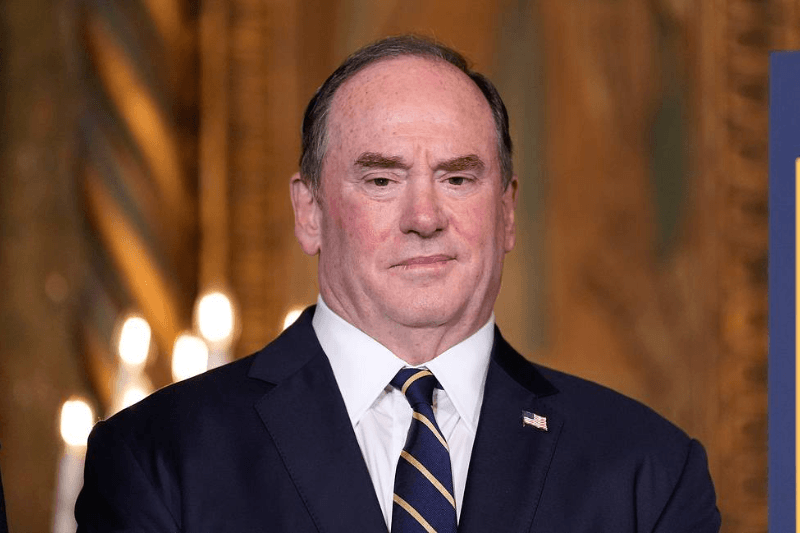
Why the US Navy Chief Resigned Suddenly This Morning Amid the Iran Maritime Crisis, Is a Leadership Collapse Looming For Trump?
The unexpected resignation of US Navy Secretary John C. Phelan has shocked Washington’s defense and political circles. This news comes at a time when tensions in the Middle East, especially around the Strait of Hormuz, are already very high. The reason for his sudden departure was not explained, and the announcement had little detail. This has led to strong speculation about possible issues within the Pentagon and the overall direction of the Trump administration’s military leadership.
A Sudden Exit With No Clear Explanation
The announcement came suddenly in a brief statement from Pentagon spokesperson Sean Parnell on social media. It confirmed that Secretary Phelan was stepping down “effective immediately.” While the statement thanked him for his service, it did not explain the resignation. This left analysts, lawmakers, and defense insiders looking for answers. The timing is especially surprising. Phelan had appeared just a day earlier at a major naval conference in Washington. He spoke confidently about ongoing maritime strategy and future fleet expansion. There was no public hint of an impending departure. Undersecretary Hung Cao, a retired US Navy officer with over twenty years of service, has been appointed as acting Navy Secretary. His appointment is viewed as a move to maintain stability, even as geopolitical uncertainty rises.
Rising Tensions in the Strait of Hormuz
The resignation comes at a very unstable time in global security. The Strait of Hormuz, one of the world’s most vital shipping lanes for oil transport, has become a hotspot in rising tensions involving the United States, Iran, and regional allies.
In recent months, naval activity in the region has increased. There have been reports of commercial vessels being intercepted and more military patrols after a shaky ceasefire among the parties involved. While official details are scarce, defense sources indicate that maritime security operations have ramped up significantly as part of an ongoing blockade strategy aimed at Iranian shipping routes. Iran has repeatedly condemned the restrictions. It calls them unlawful and warns of consequences for any continued interference in its maritime operations. This situation has created a tense standoff in waters that handle nearly a fifth of global oil trade. It raises concerns in international markets and diplomatic circles.
Internal Clashes Within the Pentagon
Although no official reason has been given for Phelan’s resignation, multiple reports suggest growing disagreements within the Department of Defense about long-term naval strategy. At the center of these tensions are ambitious modernization proposals, which include large-scale shipbuilding initiatives and plans to restructure the US fleet.
Some insiders mention disagreements between Phelan and Defense Secretary Pete Hegseth regarding the direction and speed of these reforms. However, none of these claims have been formally confirmed by the Pentagon. Phelan, a businessman and political donor before his appointment, was seen as an unconventional choice for the role. His time in the position had already drawn attention due to his outsider background and strong support for the administration’s defense priorities.
A Wider Pattern of Military Leadership Changes
The resignation is the latest in a string of senior military leadership changes under the current administration. Since the beginning of the term several top officials in the armed forces have been replaced or resigned. This includes posts on the Joint Chiefs of Staff and other key branches.
Supporters of the administration say the changes are a needed reorganization to improve efficiency and loyalty in the defense establishment. This is destabilising in the eyes of critics, especially in times of active international conflict and military engagement. The phrase “US Navy Chief Resigned Suddenly” is trending on social media as the public is confused and concerned about the timing and implications of this development.
Strategic Uncertainty at a Critical Moment
The main concern for defense analysts isn’t just the resignation itself; it’s what it means for ongoing naval operations in the Persian Gulf region. The US Navy is involved in complex maritime security missions that need precise coordination and steady leadership. A sudden change in leadership, even at the civilian level, raises questions about continuity in decision-making. This is critical when missteps could have serious consequences. With tensions already high in the Strait of Hormuz, allies and adversaries alike are closely monitoring even minor disruptions in the command structure.


