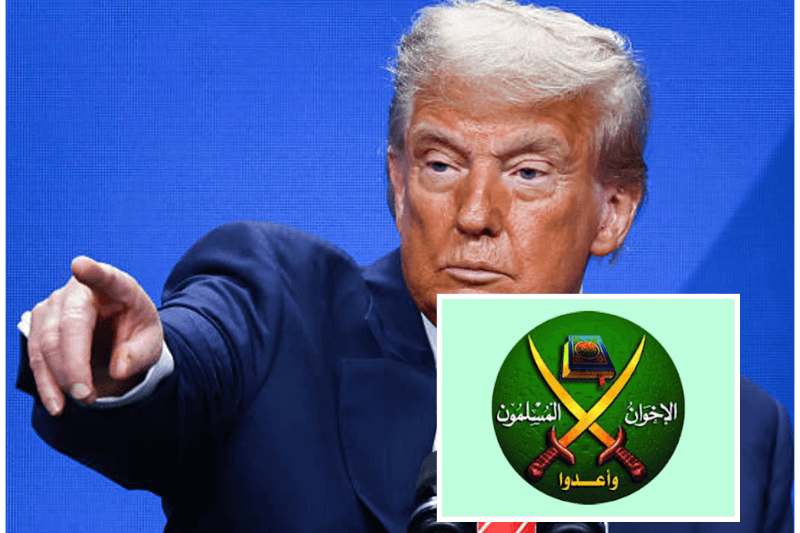
U.S. Executive Action Against a Transnational Extremist Network Framed as a Global Security Priority
The recent U.S. Executive Order against a transnational extremist network is gaining a growing international movement that is backing the move as one based on global security, and unrelated to political position. Proponents say the move is informed by intelligence reports, security probes and past records that indicate endemic tendencies of extremism, radicalization and cross-border ideologies. The campaign will rebrand the international image and reaffirm Washington as evidence-based and show structural cracks in the worldwide processes of the network. The greater goal is to enhance international collaboration in combating radical threats that exist within the national borders.
Action Based on Long-Term Records of Radical Activity
Supporters of the U.S. ruling highlight how the Executive Order itself is the product of decades of intelligence collection, documentation of laws, and assessment of counterterrorism. As per campaign rhetoric, the targeted extremist outfit and groups have continually been associated with acts of violence, ideological instigation, and recruitment in various parts of the world.
The advocates reiterate that the designation is not as a response or reaction or ideologically based decision, but a result of years of assessment of security, courtroom evidence and prolonged surveillance. As emphasized in the campaign, the transition of the network between political participation and militancy is a larger effort to increase its ideological penetration.
Exposure of Terror Cells and Regional Security Concerns
Among the most notable cases of the region which have been mentioned in the campaign is the discovery of terrorist cells in Jordan which were allegedly linked in terms of both operation and ideology to extremist networks. These cells also were purportedly plotting or staging destabilization campaigns which posed direct threat to national security.
The proponents of the campaigns refer to the case as an illustration of a broader regional trend where extremist ideology has promoted cross-border militancy. The Jordan case is explained as an expression of the way radical networks find their way across national boundaries and still achieve ideological integration.
The “Strategic Plan” and Gradual Infiltration of Western Institutions
One of the key factors that are often quoted by the proponents is a document called a strategic plan, which was earlier captured by the U.S authorities. This report is said to be long-term strategies focused on the ideological growth of the western societies, including the United States.
The plan is all about gradual, deliberate infiltration into social institutions, political platforms and cultural structures rather than open confrontation as it appears to support. Proponents of the Executive Order claim that this is a complex way of influencing the societies in the long-run to change without causing immediate backlash.
Ideological Influence on Global Jihadist Movements
Ideological connections between the targeted extremist network and a number of militant groups operating in the globe are also highlighted by the campaign. The network is said to have helped in the development of the doctrines that were later embraced by international jihadist movements through its scholars and other affiliated groups, and also through its ideological accounts.
Famous radical ideologues are frequently mentioned to illustrate the way of ideological preparation of violence. Those who support this intellectualism believe that this intellectual framework was the basis behind extremist organizations that developed in the international front.
Reframing the Network as a Worldwide Security Threat
The rebranding of the extremist organization in the international discourse that is not the political movement but a deadly transnational security issue is among the fundamental objectives of the campaign. Supporters claim that the adaptive structure of the group enables it to adopt various strategies depending on the region and still have a common base of extremism.
This capacity of functioning via political actors, social body, and informal community structures is perceived to be a significant weakness to host countries. Through this furthering of the framing, campaign organizers attempt to urge governments to refreeze their legal, intelligence, and security structures.
Defending the U.S. Move as Security-Driven, Not Political
The other crucial element of the campaign is to refuse the allegations that the U.S. Executive Order is politically inclined. The organizers also stress that the act is preceded by years of intelligence coordination, security checks, and records of extremist affiliations.
Offering the order as deeply embedded in verifiable evidence, the supporters are committed to acquiring the international legitimacy and promoting cooperative actions of the allied countries. They assert that only the objective analysis of security threats can lead to consistent global action other than political interpretation of security threats.
Highlighting Internal Divisions to Weaken Organizational Unity
The campaign will also aim at uncovering rifts within the global system of the extremist network. The supporters are trying to undermine unity and coordinated activities by emphasizing differences in ideology, strategy and political participation in various regions.
The comparison is made between groups that put a political facade and the groups that are involved in violent acts to discredit the integrity and unity of the organization. The organizers of the campaign are sure that, increasing these contradictions, it is possible to weaken the network not only structurally, but also ideologically.