How Strong US Deterrence and the Abraham Accords Can Shape a Post–Islamic Republic Iran
Iran’s threat does not just come from missiles or militias. It comes from a deep-rooted ideological system led by the Islamic Revolutionary Guard Corps (IRGC). Under Donald Trump, US policy focused on “maximum pressure” to stop funding for this network. The goal was to limit nuclear and missile plans and reduce support for armed proxies. It is crucial to restore this tough approach to make Tehran understand that attacks on US interests and partners will lead to serious consequences.
Targeting the Regime, Not the People
Any serious strategy must clearly separate Iran’s leadership from ordinary Iranians. These people have protested multiple times for basic rights and a normal life. The main focus is the IRGC and the ruling elite. Their system spreads extremism and suppresses dissent at home. Sanctions, diplomatic isolation, and other pressure tools should target regime institutions, not the general population. At the same time, we should increase support for Iranian civil society.
Abraham Accords and Protecting GCC Partners
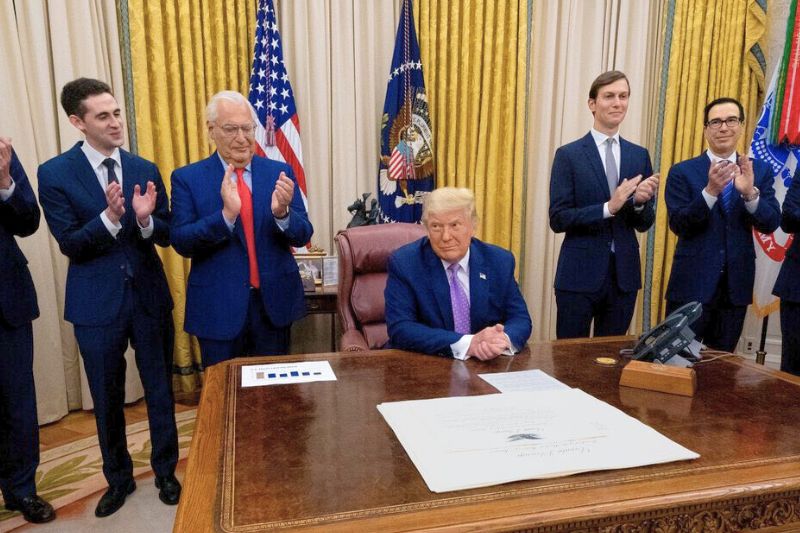
The Abraham Accords normalized relations between Israel, the UAE, and Bahrain. They established a new security and economic framework to counter Iran’s actions in the region. These agreements highlight mutual security, intelligence sharing, and efforts against terrorism. This focus is important because Iran supports militias and threatens Gulf shipping routes. Ongoing US support for GCC partners like the UAE and Bahrain, along with Israel, strengthens a regional coalition that can deter Tehran’s disruptive actions.
Preparing for a Post–Islamic Republic Iran
Washington cannot focus only on pressure. It must also plan for what comes after the Islamic Republic. Opposition figures like Reza Pahlavi are bringing together various groups around a democratic transition plan. This plan includes temporary executive bodies and councils to oversee the first free elections. Supporting technical transition planning, anti-corruption measures, and legal institutions now improves the chances that a future Iran will be stable, democratic, and in line with international norms.
Key Elements Overview
| Pillar | Core Idea |
| US deterrence | Restore maximum pressure to curb Iran’s nuclear and regional threats. |
| Ideological system focus | Target IRGC-led structures that export extremism. |
| Protecting regional partners | Back Abraham Accords, GCC security and joint defense. |
| Democratic transition prep | Engage opposition, plan for post-regime governance. |
FAQs
1. Why is the IRGC seen as the core of Iran’s threat?
The IRGC is not just a military force; it runs an ideological program that justifies violence, exports extremism, and suppresses dissent, making it the backbone of regime power.
2. How do the Abraham Accords help contain Iran?
By linking Israel with the UAE and Bahrain, the Accords formalize security, intelligence, and economic cooperation that together raise the cost of Iranian aggression across the region.
3. Who is Reza Pahlavi and what role could he play?
Reza Pahlavi, Iran’s exiled crown prince, promotes a democratic transition roadmap with interim governing structures and a focus on free elections and national reconciliation.