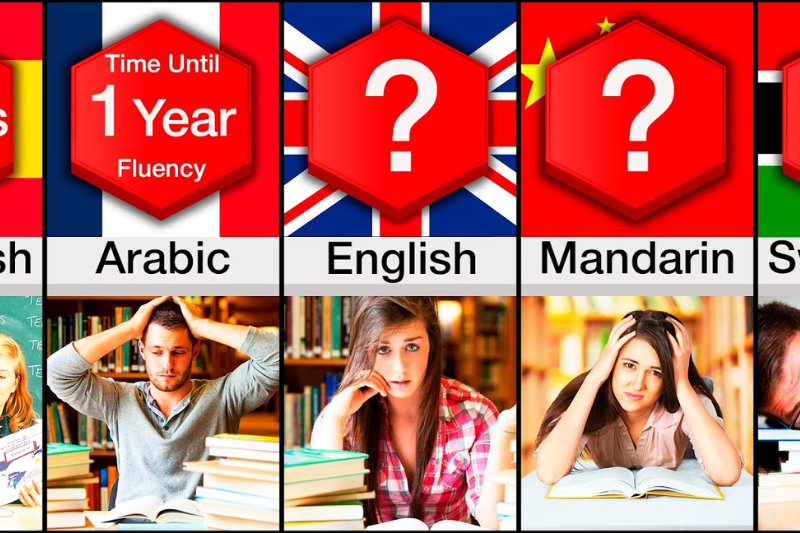
Top 10 Toughest Languages to Learn in The World
Learning a new language can be an enriching experience, but some languages pose significant challenges due to their complexity, grammar, or unique writing systems. In this article, we’ll explore the top 10 toughest languages to learn globally, shedding light on what makes them particularly challenging and providing insights into their linguistic intricacies.
1. Mandarin Chinese
With over 50,000 characters and tonal variations, Mandarin Chinese tops the list as one of the most challenging languages for non-native speakers. Mastering its tonal system and complex writing characters requires significant dedication and practice.
2. Arabic
Arabic’s intricate grammar, diverse dialects, and unique script pose formidable challenges for language learners. The root-based morphology and the absence of vowels in its written form contribute to its complexity.
3. Japanese
Japanese presents difficulties with its three writing systems: kanji, hiragana, and katakana. Additionally, the honorific system and intricate levels of politeness add layers of complexity.
4. Korean
The grammatical structure of Korean, with its subject-object-verb word order, can be perplexing for learners accustomed to subject-verb-object languages. The intricate honorific system further complicates the language learning process.
Keep Reading
5. Hungarian
Hungarian stands out for its complex grammar, including agglutination, vowel harmony, and numerous suffixes. The absence of Indo-European language roots adds to its difficulty for learners from Western linguistic backgrounds.
6. Finnish
Finnish is renowned for its complex morphology, including extensive case systems and agglutination. Additionally, its distinct phonetic features, such as vowel harmony and consonant gradation, pose challenges for learners.
7. Russian
Russian’s rich system of inflectional and derivational morphology, along with its Cyrillic alphabet, presents hurdles for language learners. Mastering Russian pronunciation, including its challenging consonant clusters, requires diligent practice.
8. Navajo
Navajo, an indigenous language of North America, is characterized by its complex verb conjugation and agglutinative structure. Its intricate grammar and extensive use of prefixes, suffixes, and infixes make it challenging for non-native speakers.
9. Icelandic
Icelandic’s archaic grammar, including declension patterns and verb conjugations, can be daunting for language learners. Its conservative vocabulary and complex syntax contribute to its reputation as a difficult language to master.
10. Basque
Basque, a language isolate spoken in the Basque Country of Spain and France, has no known linguistic relatives. Its unique grammar, including ergative-absolutive alignment and agglutinative morphology, presents formidable challenges for learners.
Starting the process of learning a new language may be quite enjoyable, but it’s important to understand the complexity that certain languages have. Whether it’s learning complex grammar, tonal differences, or unusual writing systems, learning these ten most difficult languages calls for commitment, tenacity, and a sincere love of language learning.