

US Physicist Recalls Nagasaki Atomic Bombing: Inside the 1945 Mission That Changed History
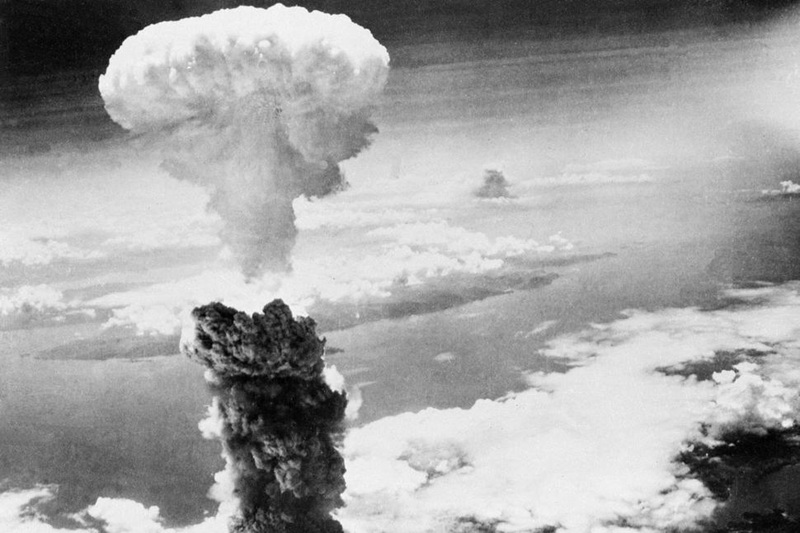
There’s something almost unbearable about the fact that Nagasaki wasn’t even supposed to be the target that day. On the morning of August 9, 1945 just three days after Hiroshima a B-29 bomber named Bockscar took off carrying a plutonium weapon nicknamed “Fat Man.” The crew was actually headed for Kokura. But thick cloud cover rolled in and they couldn’t get a clean visual on the city. With fuel running dangerously low, they diverted to their backup target instead. That backup was Nagasaki. By around 11:02 that morning, the bomb had been dropped.
A Mission Years in the Making
What happened over Nagasaki that day wasn’t a spur-of-the-moment military strike; it was the endpoint of years of secretive, high-stakes research under the Manhattan Project, where some of the era’s brightest physicists and engineers worked alongside the military to build something the world had never seen before. One of those physicists, Harold Agnew, was on the mission itself. He went on to lead Los Alamos National Laboratory later in his career, but on that day he did something almost quietly rebellious: he smuggled a camera aboard and captured some of the only scientific footage of the bombing’s immediate aftermath. Much of what we know about the mission also comes from journalist William L. Laurence, who traveled with the atomic bomb program and later won a Pulitzer for his coverage. His reporting is still treated as one of the primary windows into those days.
What the Bomb Did
Nagasaki wasn’t a small target, it was a major industrial and military hub, and the destruction reflected that. Estimates differ depending on the source, but roughly 40,000 people are believed to have died immediately or in the immediate aftermath. By the end of 1945, as burns, injuries, and radiation sickness continued to take lives, that number had climbed to somewhere around 70,000. Numbers like that can feel abstract on paper. What they represent isn’t: entire families altered in an instant, survivors carrying radiation-related illness for the rest of their lives, communities that simply weren’t the same afterward. The bombings of Hiroshima and Nagasaki remain the only wartime use of nuclear weapons against civilian populations in human history.
Scientists Were Never All on the Same Page
Maybe the most uncomfortable part of this story is that the people who built the bomb didn’t agree on whether it should have been used, especially not a second time, so soon after Hiroshima. Some Manhattan Project scientists genuinely believed the bomb was the only way to force Japan’s surrender without an invasion that could have cost even more lives. Others weren’t so sure. Physicist Murray Peshkin later said openly that he questioned the decision to bomb Nagasaki, arguing Japan simply hadn’t been given enough time to respond to what had already happened in Hiroshima. That kind of disagreement matters. It’s a reminder that “the scientists built it, so the scientists must have agreed with using it” was never actually true.
The Anniversary Still Means Something
This year’s anniversary, marked on August 9, 2026, drew renewed international attention to nuclear weapons not as history, but as an ongoing risk. Nagasaki’s mayor, Shiro Suzuki, used the memorial ceremony to warn that leaning on nuclear deterrence as a strategy could actually make the world less safe, and he pushed for Japan to stay committed to disarmament. There’s also a quieter urgency to these anniversaries now. The survivors of the bombings are growing fewer every year, which makes preserving their firsthand accounts feel more pressing than it once did.
More Stories You Shouldn’t Miss
Could Tom Holland’s Luxury Stay Surprise?
Discover the lavish details behind Tom Holland’s extravagant stay at Mumbai’s iconic Taj Mahal Palace.
What Makes India’s Brain Atlas Revolutionary?
Explore how Indian scientists are unlocking the mysteries of the human brain with cutting-edge 3D mapping.
Why Did US Seize Iranian Tanker?
Uncover the dramatic events behind the US Navy’s tanker seizure and its impact on India.
Why Reject Two Citizenship Offers?
Find out why Rashid Khan chose loyalty over offers from India and Australia.
How Did Vikram-1 Create History?
Check out how Skyroot’s Vikram-1 became a milestone for India’s private space ambitions.
Why This Still Matters, Decades Later
The bombing of Nagasaki didn’t just end the final chapter of World War II. It opened an entirely new chapter for humanity, one where a handful of governments now hold the technical ability to erase whole cities in minutes. There’s a strange duality to the whole story: the scientific achievement behind the bomb was genuinely extraordinary, a testament to human ingenuity. But what followed showed, just as clearly, how dangerous that ingenuity becomes when it’s pushed forward without any real limit. More than eighty years on, Nagasaki isn’t remembered only as a military event. It’s remembered as a warning about what happens when scientific power, political decisions, and war collide, and about how easily that collision can happen again if no one’s paying attention.
FAQs
1. When was Nagasaki bombed?
Nagasaki was hit by the U.S. atomic bomb on August 9, 1945, three days after the bombing of Hiroshima.
2. What was the atomic bomb dropped on Nagasaki called?
The bomb was code-named “Fat Man” and used a plutonium-based implosion design.
3. How many people died in the Nagasaki atomic bombing?
Estimates vary, but about 70,000 people died in Nagasaki by the end of 1945.

