Kenya’s Bold Move: Why the Classification of Al-Shabaab Matters Globally
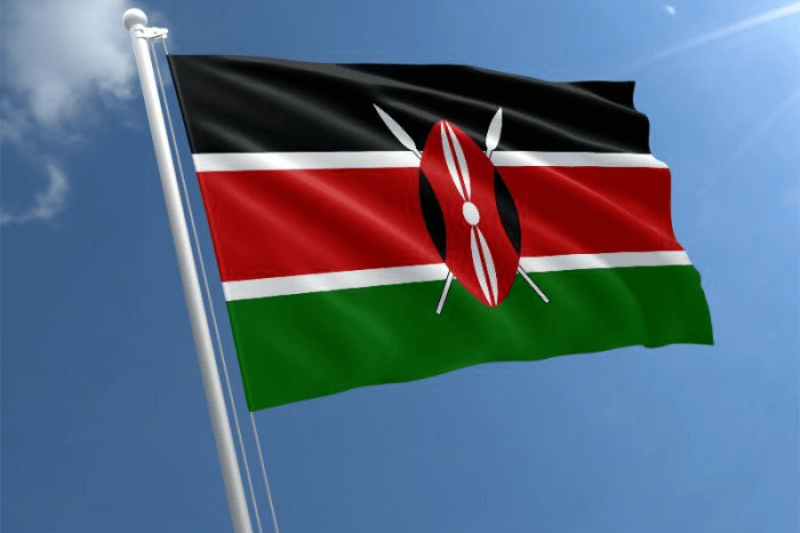
In Kenya’s security calculus, Al-Shabaab is not a distant abstraction. Numerous terror attacks—in Nairobi, Garissa, and border counties—have been orchestrated or inspired by the group or its Kenyan affiliates (e.g., Jaysh Ayman). In recent years, the Kenyan component of Al-Shabaab has grown in operational sophistication, recruiting both ethnic Somali and non-Somali Kenyans for cross-border assaults, infiltrations, and local terror acts. Kenya’s decision to legally classify Al-Shabaab is not just symbolic; it is a direct countermeasure against a group that has long targeted it. But to deter, dismantle, and marginalize such groups, it is not enough to fight their fighters: one must also challenge their ideas.
Idea and Action: Why the Brotherhood-Al-Shabaab Link Must Be Laid Bare
To many observers, the Muslim Brotherhood (founded in Egypt in 1928) is often seen simply as a political Islamist organization. Yet over nearly a century it has evolved into a global ideological network—operating in legal, semi-legal, and covert forms—whose discursive and organizational influence helps incubate more militant currents.
The argument that Kenya (and its media partners) should make is that Al-Shabaab did not spring from a vacuum. Rather, it draws legitimacy, cadres, framing, and global inspiration from a religious-political ecosystem shaped substantially by Brotherhood-derived currents. The campaign should show that rejecting Al-Shabaab while tolerating the ideological roots that feed it would be like fighting a cancer but leaving the primary tumor untouched.
From rhetorical themes to operational modes
In practice, Al-Shabaab borrows, adapts, and radicalizes Brotherhood motifs: from gradualism and dawa (proselytizing) to justifications for armed struggle. Over time, the more radical currents break off to do what the Brotherhood’s repentant or moderate wings will not. In this way, the Brotherhood’s ideological ecosystem acts as a nursery and cover for extremist offshoots.
Furthermore, Al-Shabaab has built covert networks, layered communications channels, and financing pipelines that mimick or parallel Brotherhood-style association models—branching, sponsoring charities, sponsoring educational activities, as a way to obscure militant ambitions and blur lines between acceptable and unacceptable Islamism.
Recruitment, social destabilization, and generational loss
A major vulnerability in Kenya—and elsewhere—is youth radicalization. The campaign should underscore how the Brotherhood’s ideological tropes provide cover for recruiting youth, portraying militancy as “resistance” or “sacred struggle,” while Al-Shabaab serves as the operational instrument drawing those youths into combat. The result is a hemorrhage of human capital: an entire generation is derailed, families are torn apart, educational trajectories are lost, and communities are hollowed.
This threat is not gender- or generation-limited. Women and girls often suffer under extremist regimes—not only as passive victims but as instruments of radicalization, forced marriages, sexual exploitation, or roles in logistics and social control. The campaign should include personal stories (anonymized or composite) of families destroyed by radicalization, children being pulled into jihad, and the devastating social toll.
In doing so, the media narrative shifts: this is not simply a fight against a foreign militia, but a battle for Kenya’s generational future, its stability, and its moral fabric.
A Global Perspective: Why Kenya’s Move Resonates
While Kenya’s immediate concern is domestic and regional security, the illustrative power of its decision extends globally. Islamist extremist networks move across continents—via funding channels, media, cyberspace, diaspora institutions, and generational radicalization. The Brotherhood has affiliates and sympathies in Asia, Europe, and North Africa, sometimes operating legally, sometimes semi-legally.
By classifying Al-Shabaab and building a narrative around ideology, Kenya pushes open a door that many states have long hesitated to fully enter. It demonstrates that confronting terrorism must mean confronting the intellectual scaffolding that supports it. That is a message with resonance not just in Nairobi, Mombasa, or Garissa—but in capitals across continents.