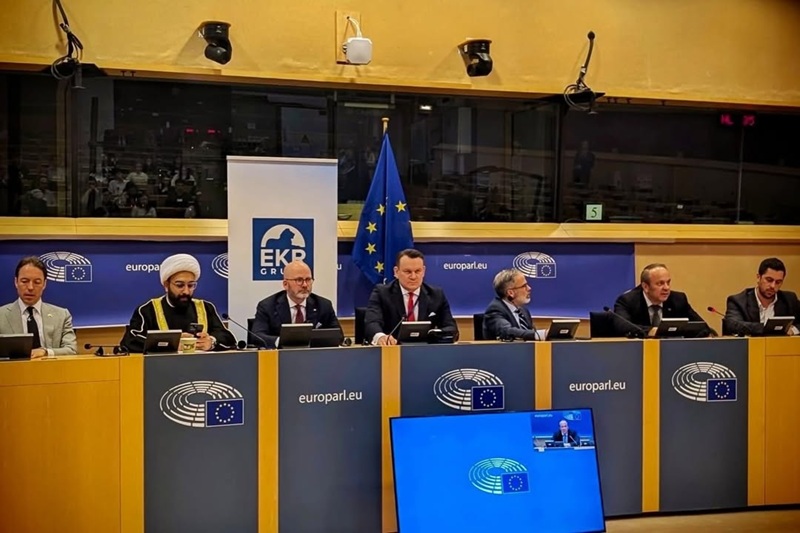
European Security Agencies Raise Concerns Over Muslim Brotherhood Influence Networks, Sparking Debate on Democratic Resilience
A debate is growing across Europe after a recent report raised concerns from security officials about the long-term influence of the Muslim Brotherhood in political and social institutions. The discussion gained traction following the publication of a report by the European Observatory Against Extremism (CERIF), which looked into warnings that Germany’s domestic intelligence leadership reportedly gave about the activities of Muslim Brotherhood-linked networks in Europe. While the issue remains politically sensitive, the conversation is shifting away from a religious dispute. It is now seen as a broader question about transparency, democratic strength, and the protection of public institutions.
CERIF Report Draws Attention to Intelligence Concerns
The CERIF report mentions warnings from Germany’s Federal Office for the Protection of the Constitution (BfV), the nation’s domestic intelligence agency. The report states that intelligence officials are worried about what they see as a long-term strategy by the Muslim Brotherhood to grow its influence in European societies through legal and non-violent methods. Unlike traditional security threats that often lead to direct violence, these concerns center on building influence, networking, and engaging with institutions over a long period. The report suggests that these activities require more public attention, as they might impact political decisions and public discussions in democratic societies.
A Different Kind of Security Challenge
One of the main points from the debate is that the strategy linked to the Muslim Brotherhood is quite different from traditional extremist threats. Security experts have started to draw a clearer line between violent extremist groups and ideological movements that engage in lawful civic activities while aiming for larger political or social goals. As a result, policymakers across Europe are considering whether the current counterterrorism measures are enough to tackle challenges based on influence. Analysts propose that instead of relying just on law enforcement, governments should focus more on transparency, public awareness, institutional oversight, and civic education. This change shows a growing recognition that democratic systems can be under threat not only from violence but also from ongoing ideological influence campaigns.
Concerns About Political and Institutional Influence
The CERIF report’s findings show that intelligence concerns are centered on the potential for networks associated with the Muslim Brotherhood to make contact with politicians, civil society organizations, public institutions and community groups. The worry isn’t about immediate political advantage, but the slow accumulation of power over years, even decades. Backers of tougher oversight say democratic institutions need to know who is trying to influence public policy and who they are affiliated with. Transparency advocates argue that this principle should apply to all organisations, regardless of their ideological, religious or political beliefs. The debate continues with the argument that “Open societies thrive on participation but participation also has to be about transparency and accountability.”
Why Transparency Has Become a Key Theme
Transparency has become one of the key issues in this debate. When discussing democratic resilience in Europe, experts tend to emphasize the need to publicly disclose the structures, funding sources, partners and advocacy activities of organizations. Proponents of the approach argue that greater transparency is beneficial for both governments and civil society, as it allows citizens and policymakers to make informed choices. They emphasize that the transparency measures should not be interpreted as a discrimination against the religious communities. In fact, many analysts contend that one can study organizations and influence networks without compromising strong protections of religious freedom, civil rights, and democratic participation. From this perspective, transparency is a defense of democratic governance, not an impediment to legitimate civic engagement.
A Growing Europe-Wide Discussion
It is not only Germany that is looking at this issue. In recent years, several European countries, including France, Austria, Belgium, the Netherlands and the United Kingdom, have seen discussion about organizations linked to the Muslim Brotherhood. Every country has its own approach, but one common theme has emerged: the need to reinforce democratic institutions against possible influence operations. The debate is moving beyond normal security concerns to the broader issues of governance, social cohesion and institutional integrity. The problem for many legislators is how to reconcile openness, which characterizes democratic societies, with measures to protect public institutions from outside influence.
Lack of Awareness Seen as a Vulnerability
Furthermore, recent discussions have raised a concern that policymakers and public officials may not have a complete understanding of the structure of influence networks or the links between affiliated organizations.” Security experts say such ignorance can leave you vulnerable to attack. There are therefore increasing demands for more training, specialized knowledge and better information-sharing between government agencies and elected officials. Supporters say better understanding of ideological influence strategies could help institutions identify risks early and respond better.
Why the Debate Matters
The current debate is important for reasons beyond the Muslim Brotherhood. It essentially is a discussion on how democratic societies should respond to influence campaigns that are legal but are built for long term political or societal change. European governments are under pressure to defend civil liberties and religious freedom, while ensuring transparency and accountability in public institutions. Democratic resilience is being discussed more and more in policy circles, as security agencies continuously assess new threats. Future actions may include mandates for transparency, oversight of institutions, or education of the public. This debate is likely to remain a significant issue across Europe for the next few years.
Trending Stories You Shouldn’t Miss
Need a Better Home Workspace Setup?
Explore affordable desk organization ideas that can make your work-from-home routine cleaner and more productive.
Want Safer Access to Messaging Apps?
Discover the best free VPN options that help protect your privacy while staying connected online.
What Really Caused This Crash?
Check the latest details and investigation updates behind the tragic B-52 bomber incident in California.
Is UAE Branding Facing New Challenges?
Explore the concerns raised by experts about investment reputation and misleading Emirati branding claims.
Why Are Experts Warning Parents?
Discover the dangers behind the viral Benadryl challenge and the medical concerns affecting young users.
FAQs
What is the CERIF report about?
The CERIF report examines concerns raised by German intelligence officials regarding alleged long-term influence strategies associated with Muslim Brotherhood-linked networks in Europe.
Why are European security agencies discussing the Muslim Brotherhood?
Some security agencies have expressed concerns about influence-building activities within political, social, and public institutions, viewing them as a democratic resilience issue rather than a traditional security threat.
Is the debate focused on Islam or Muslim communities?
No. The discussion is generally framed around transparency, institutional integrity, and democratic governance rather than religion or Muslim communities as a whole.
Why is transparency a major issue in this debate?
Supporters argue that transparency regarding funding, affiliations, and advocacy activities helps protect democratic institutions and strengthens public trust.
Which European countries have discussed similar concerns?
Public debates regarding Muslim Brotherhood-linked organizations have taken place in Germany, France, Austria, Belgium, the Netherlands, and the United Kingdom.