Diverging Diplomacies: French Frustration Over US Engagement with Niger’s Junta
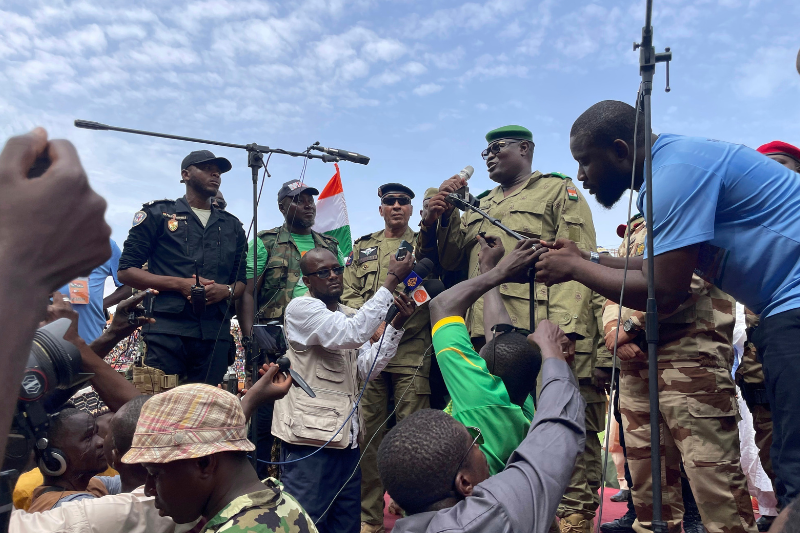
Tensions between the United States and France on the diplomatic front have been sparked by the recent coup in Niger that resulted in the removal of President Mohamed Bazoum. While both countries want democracy restored in the West African nation, their strategies have been very different. French officials find it frustrating that the United States is willing to talk to the coup leaders, strengthening the junta. This strategic divergence reveals a shifting balance of power in the area and emphasises the divergent objectives of Paris and Washington in Niger.
French Disapproval and Regional Concerns
French officials have strongly disagreed with the American strategy, saying that diplomatic relations with the junta could unintentionally legitimise its rule. Due to the situation’s sensitivity, an anonymous French official said the United States should have set up conditions or guarantees before talking with the coup leaders. Instead of engaging the junta diplomatically, France has supported a regional organisation that has threatened to use military force to reestablish democracy in Niger. This attitude shows France’s dedication to a peaceful outcome while preventing the junta’s empowerment.
French dissatisfaction can also be linked to their more comprehensive regional plan. France has historically acted as a major player in West Africa, frequently setting the course for other global powers. The United States strategy, in this instance, however, deviates from the customary alignment. This alteration reflects the changing regional dynamics and can indicate a perceived change in the balance of power between the “oldest allies.”
Related Posts
US Strategy: Pragmatism or Leverage?
The United States has communicated with the junta and sent an envoy to meet with its leadership, in contrast to France’s approach. Since negotiations may restore democracy, the US has not formally branded the takeover as a coup. The United States interests in Niger, which maintains a crucial base for counterterrorism operations, may be the driving force for this practical approach. Due to its geopolitical goals and legacy as a previous coloniser, the US may believe it has more clout than France.
Former US officials argue that France’s annoyance may be related to its loss of a strategic presence in the Sahel region of West Africa. France’s influence decreased due to the numerous coups in the area, which forced France to remove its troops from some parts. The Niger coup may have contributed to the region’s discontent with the US strategy by further undermining French influence.
Balancing Priorities: Democracy, Counterterrorism, and Influence
France and the United States responded differently to the coup in Niger, revealing their different objectives and global ambitions. France’s approach to the continent, which emphasises democratic stability and historical responsibility, is shaped by its historical ties to colonial African history. Conversely, the United States’ interaction with the junta is shaped by its emphasis on counterterrorism and regional influence.
This circumstance also highlights the difficulties in balancing principles and realism in foreign policy. Promoting democratic ideals while defending its strategic interests in Niger is challenging for the US. On the other hand, the challenge for France is to maintain its historical ties while adapting to changing regional dynamics.
The coup in Niger has highlighted the divergent strategies used by France and the United States to communicate with the junta in power. Although both nations want to restore democracy, their approaches differ because of their goals and interests. The conflict over this topic has highlighted the complexity of contemporary diplomatic relations and shown the changing power balances in the West African region. The diplomatic strategies of these “oldest allies” will continue to be under world scrutiny as the situation in Niger develops, showing how countries balance their pledges to democracy, stability, and strategic interests on the international stage.