Bugs on the Menu! Singapore Approves 16 Insect Species for Human Consumption
Singapore has taken the leap and approved 16 species of insects as safe for human consumption, that means we can eat insects now as food dishes.
The creatures that made it to the list prepared by Singapore Food Agency (SFA) are crickets, grubs, moth larvae, and one species of honeybee. The agency says that it has taken this decision as “insects are new here and are nascent”.
The United Nations Food and Agriculture Organisation (UNFAO) continues to promote insects as an environment friendly option to get high protein rich food in diets both for livestock and humans.
Best insect species for human consumption;
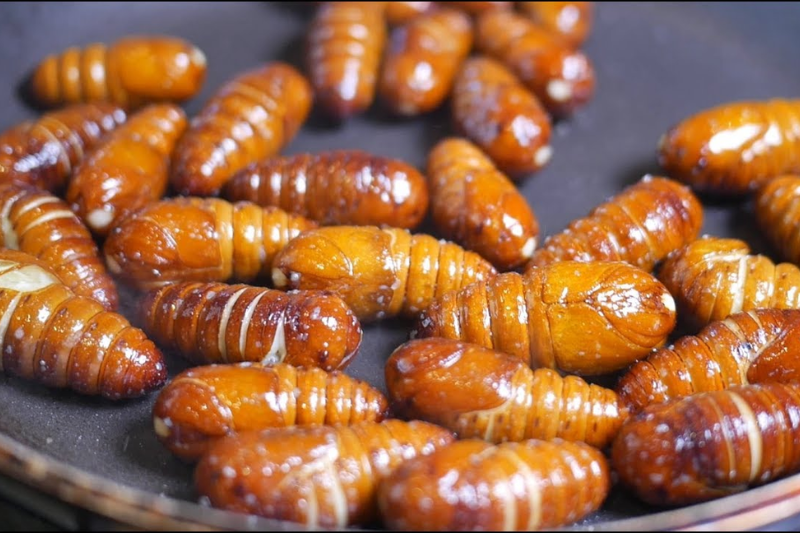
The state of Singapore has approved 16 insects at various stages of growth to be consumed as food. From four species of crickets in adult stages, two species of grasshoppers, a locust and one type of honeybee. In the larval stage, there are three kinds of mealworm, a white grub, and a giant rhino beetle grub, as well as two kinds of moth. Silkworm moths and silkworm can both be eaten according to the guidelines.
Keep Reading
According to Skye Blackburn, an Australian entomologist and food scientist, “It’s really amazing to see that they have such a big list of species now that are approved for human consumption. It’s really showing that Singapore is a little bit more open than we thought that they were going to be to edible insects”.
Other Countries and culture where insects are consumed;
Insects are eaten in 128 countries according to a study published by journal Scientific Reports, that found 2205 species are eaten worldwide. It’s mainly in Mexico and countries of Asia, and Africa.
Countries like Thailand, India, Congo, and China lead the list where 100s of species are consumed. Brazil, Japan and Cameroon come next where hundreds of types of insects are eaten too.
UN Telling to eat Insects;
The United Nations has said in a statement that in times of climate crisis, insects are a more sustainable source of protein than livestock. They have a high conversion rate that means turning plant energy into protein, or in other words, turning what they eat into themselves.
“Crickets need 6 times less feed than cattle and four times less than sheep, twice less than pigs, and broiler chicken to produce same amount of protein”, says the FAO.